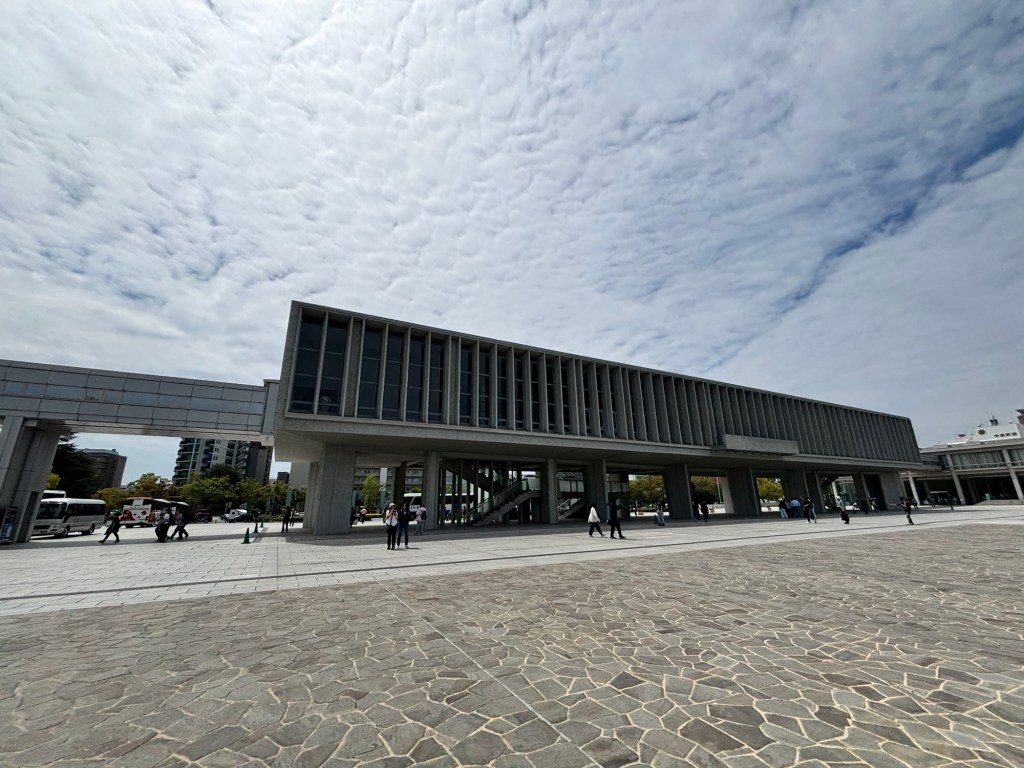
There were two main reasons we wanted to go to Hiroshima. The first one being to see the Atomic Bomb Memorial. On the 6th August 1945, the US dropped the first ever Atomic Bomb in combat over Hiroshima. By the end of 1945 it had killed 140,000 people. We went to learn more at the Hiroshima Peace Memorial Musuem.
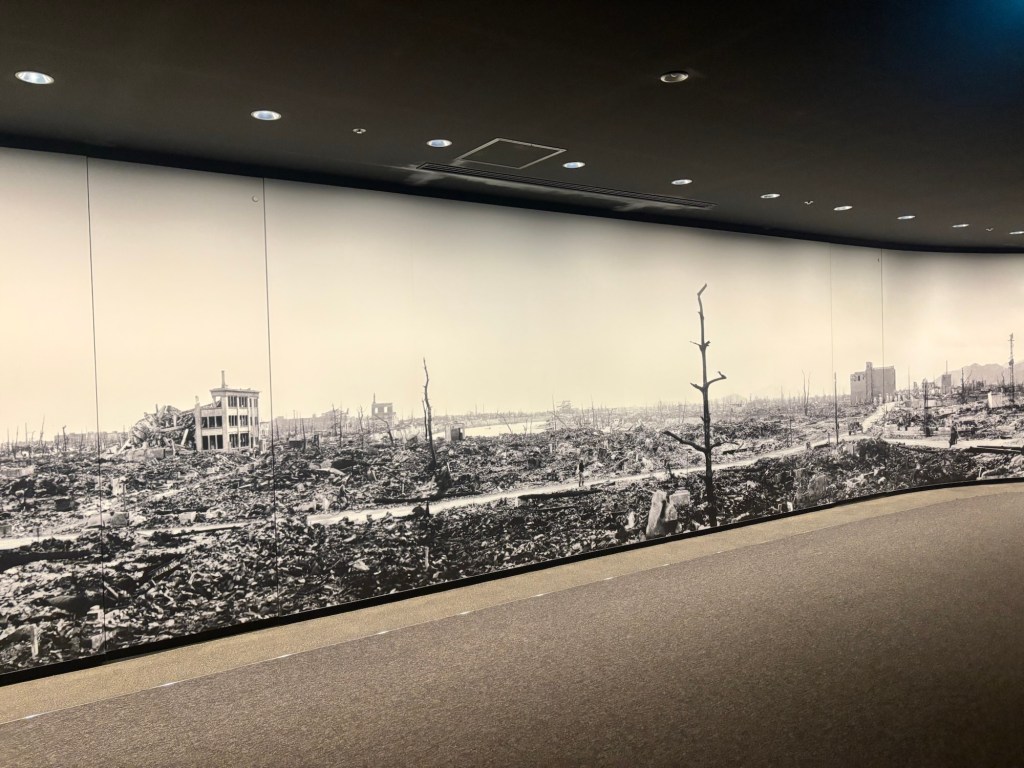
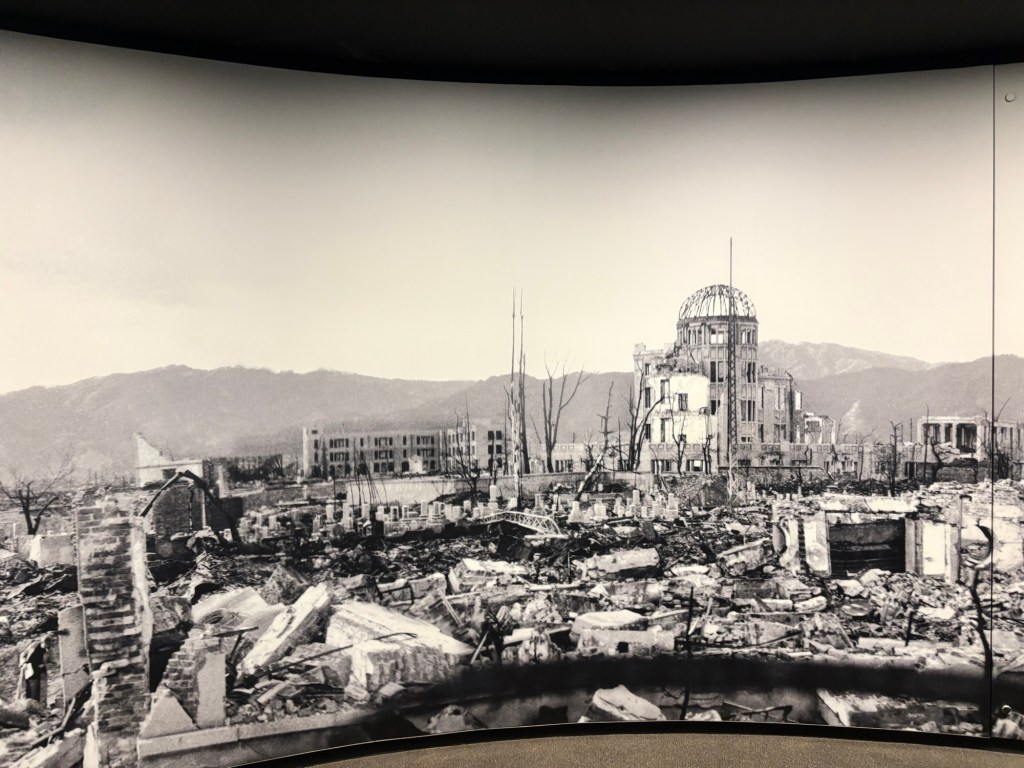
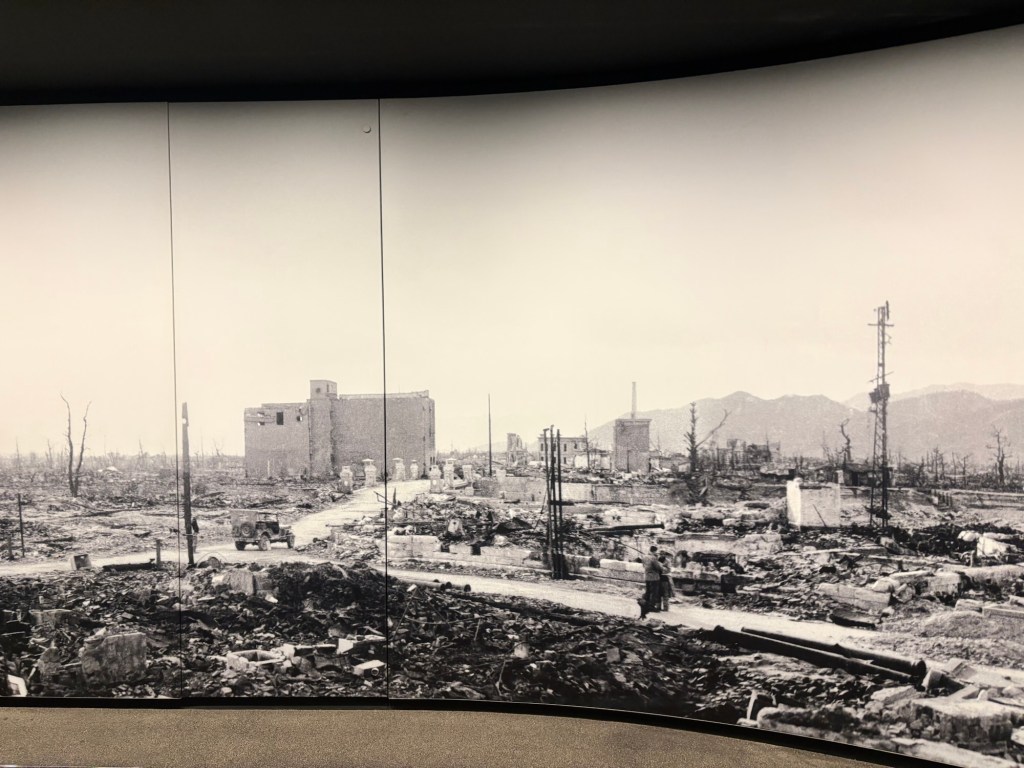
The museum starts off in a room where you’re surrounded by the 360 degree photo taken by the US Army around 3 months after the bomb was dropped when they were studying the effects.
We had a lovely guide explain to us about how the Little Boy (the bomb’s name) detonated 600m above the ground creating a super heated collection of gases. The temperature in the surrounding 2km was hotter than the surface of the sun at over 2,000 degrees Celsius.
He also explained to us about a miracle where a worker in the Fuel Hall (approximately 170m away from the hypocentre) survived down to the pure luck of being in the basement. He told us where to find the building so we made sure to check that out later in the day.
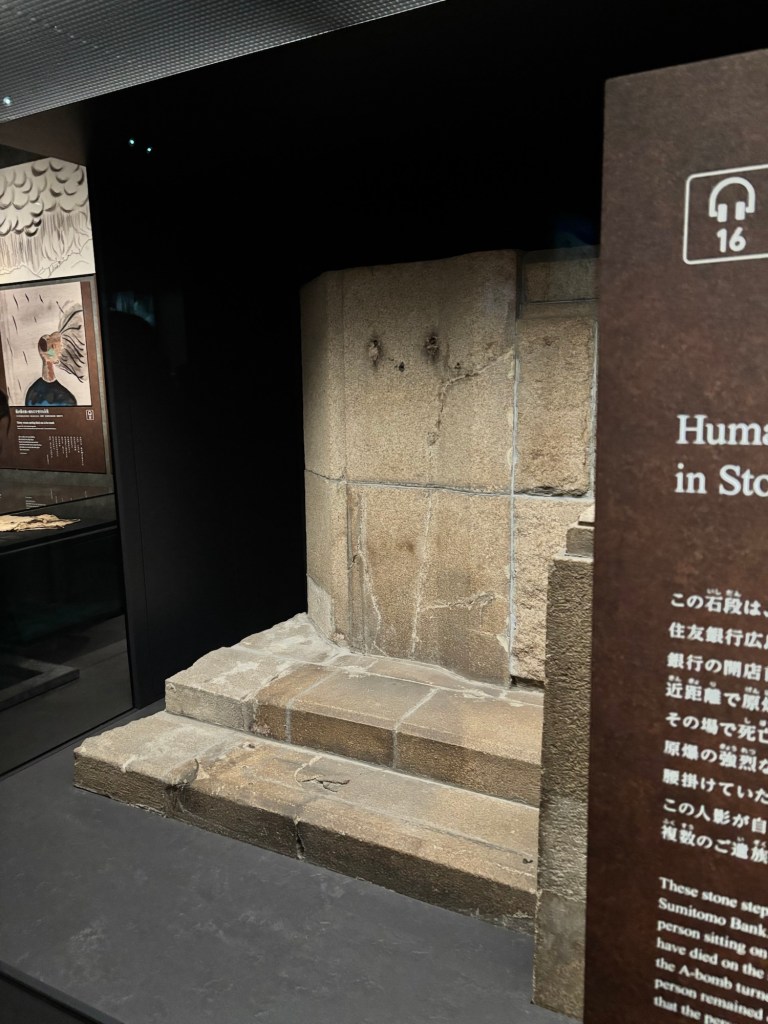
There were so many artefacts that we got to see from the huge area of around 5 square kilometres that were flattened. One of the well known ones was the human shadow etched in stone. The steps are from the Sumitomo Bank where it’s believed the person was sitting when the explosion happened. They were instantly incinerated and the blast made the surrounding steps white in colour leaving just the shadow of the person remaining.
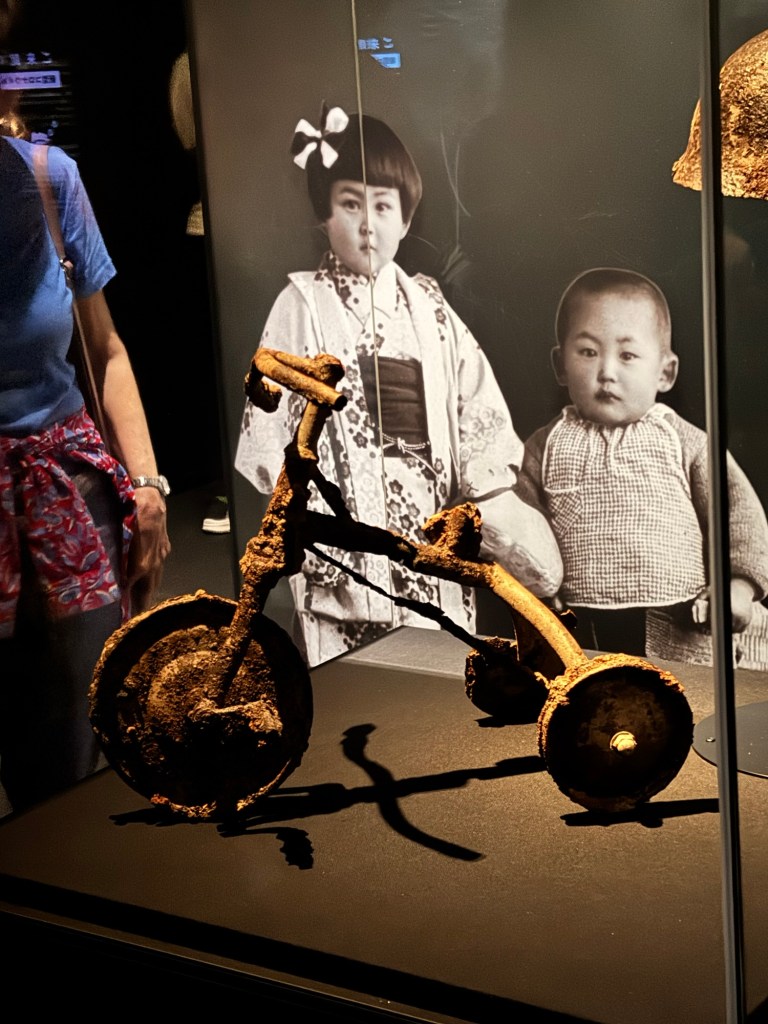
Another heartbreaking story was of a 3 year old child who was riding their tricycle when the bomb exploded. They were severely burned and died that evening.
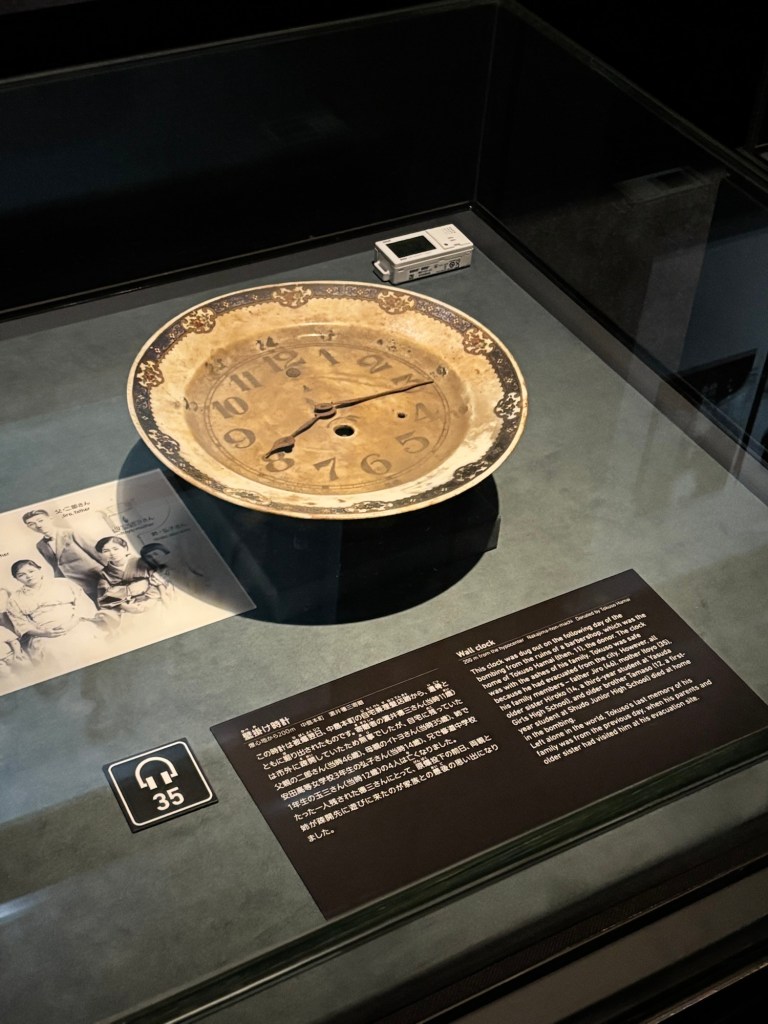
Many people’s watches and clocks are on display in the museum as most of them stopped at the exact time of the blast. The clock below was dug up from a barbershop the following day and donated to the museum by the only remaining son of the family. He had been evacuated before the bombing but his Mother, Father, Sister and Brother all died.
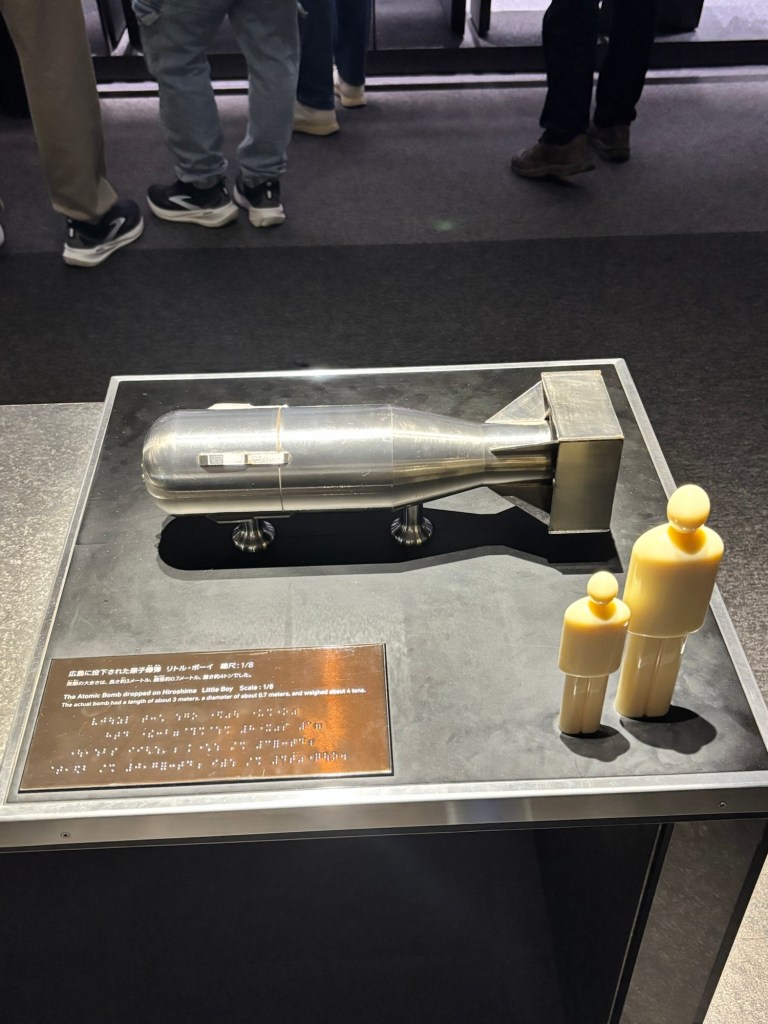
We then got to see a 1/8 scale model of the Little Boy Atomic Bomb. It was 3 metres in length, a diameter of 0.7 metres and weighed 4 tons. It was dropped from a US B-29 called Enola Gay.
After the museum we headed out into the surrounding Peace Park. The first thing we got to see was the Cenotaph. It is saddle-shaped inspired by ancient Japanese clay figurines called Haniwa that resemble houses. This shape was chosen to symbolise a shelter for the souls of the deceased.
The stone chest under the arch contains the names of 300,000 people who have died as a result of the Atomic bombing directly in 1945 or indirectly in the years after from illness such as cancer caused by the radiation.
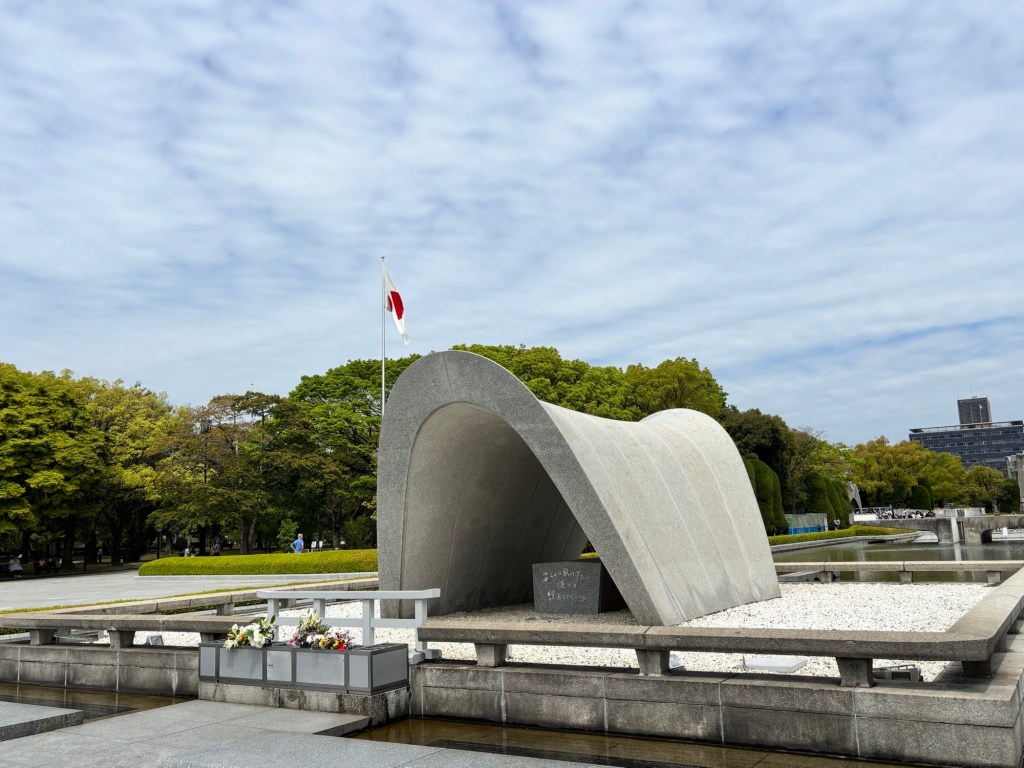
Directly behind is the Flame of Peace. It was first lit on August 1st, 1964 and has continuously burnt ever since. It serves as a pledge to the world: the flame will remain lit until all nuclear weapons have been abolished from the world.
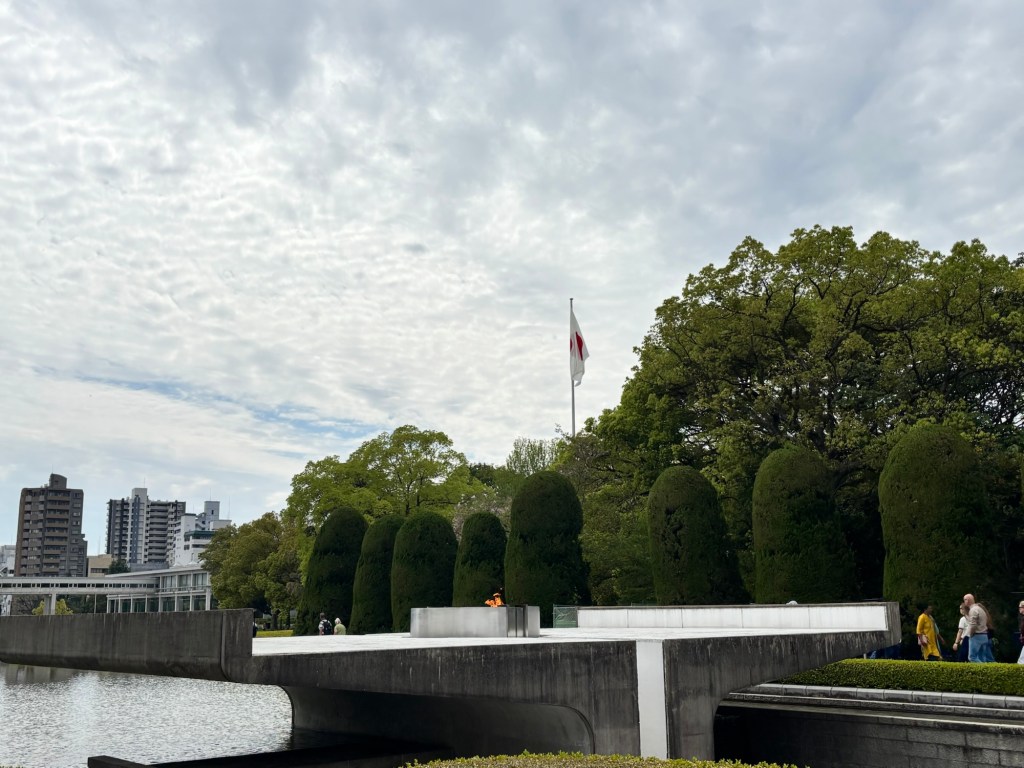
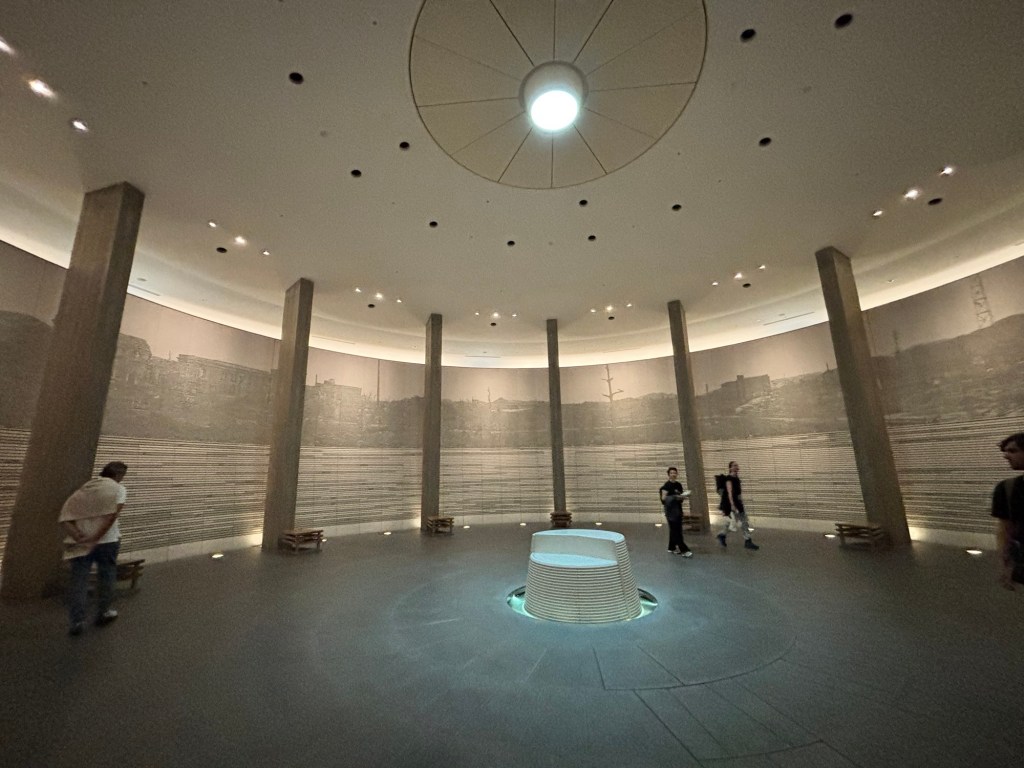
We then went into the Hiroshima National Peace Memorial Hall. The Hall has 140,000 tiles on the wall for the estimated number of people who died before the end of 1945.
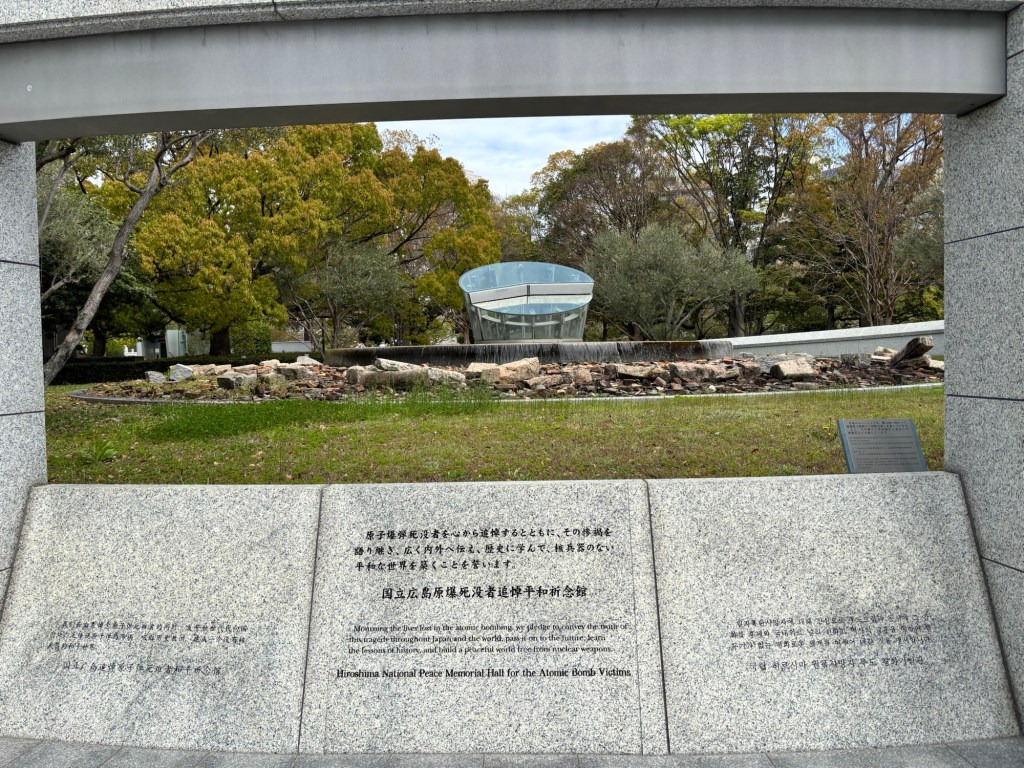
In the centre of the hall is a stone carving of a clock face frozen on 8.15am. It also has water running over the stone to serve as a symbolic offering to the victims who died craving it. There’s also some rooms dedicated to the victims that are known and have been identified. Their pictures are shown the walls in the following room and you can use computers to look up more about their lives.
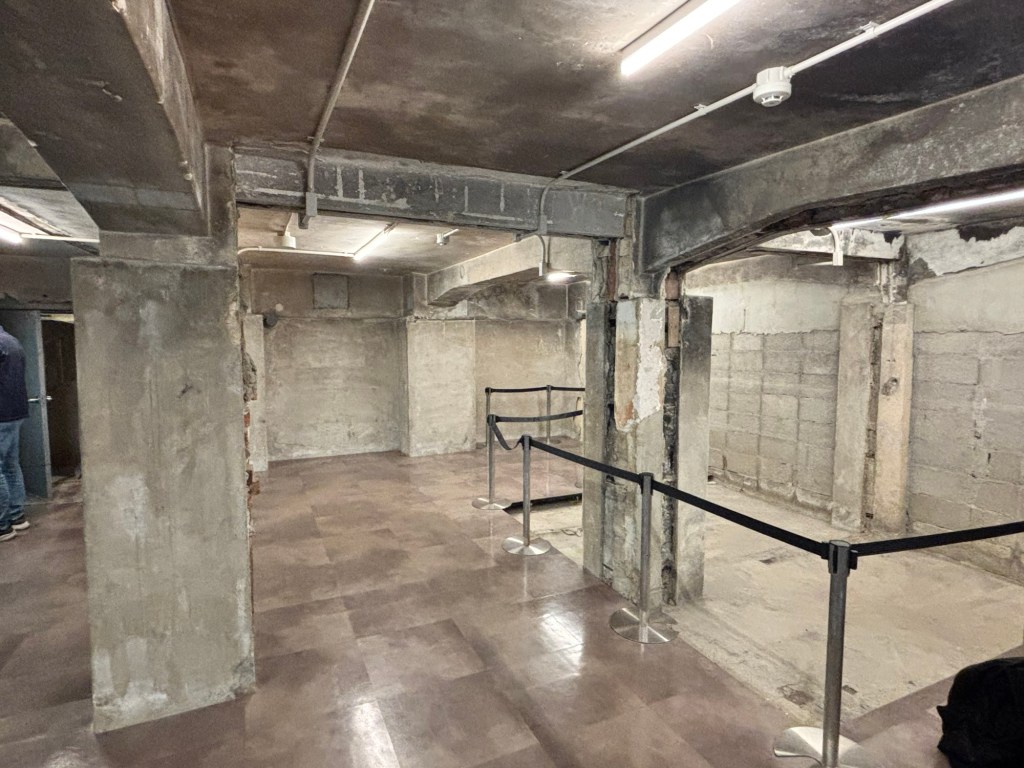
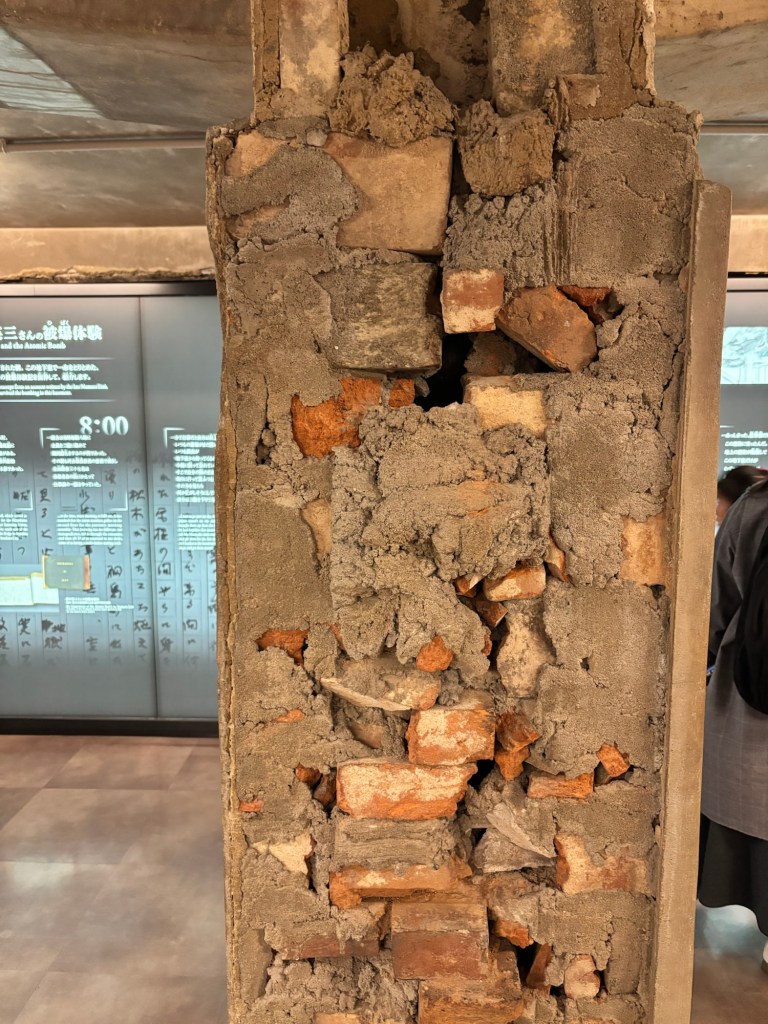
We then went and checked out the Fuel Hall as we were intrigued by the story. The Fuel Hall has been rebuilt in its exact location on top of the original basement. It now houses a cafe, shop and restrooms.
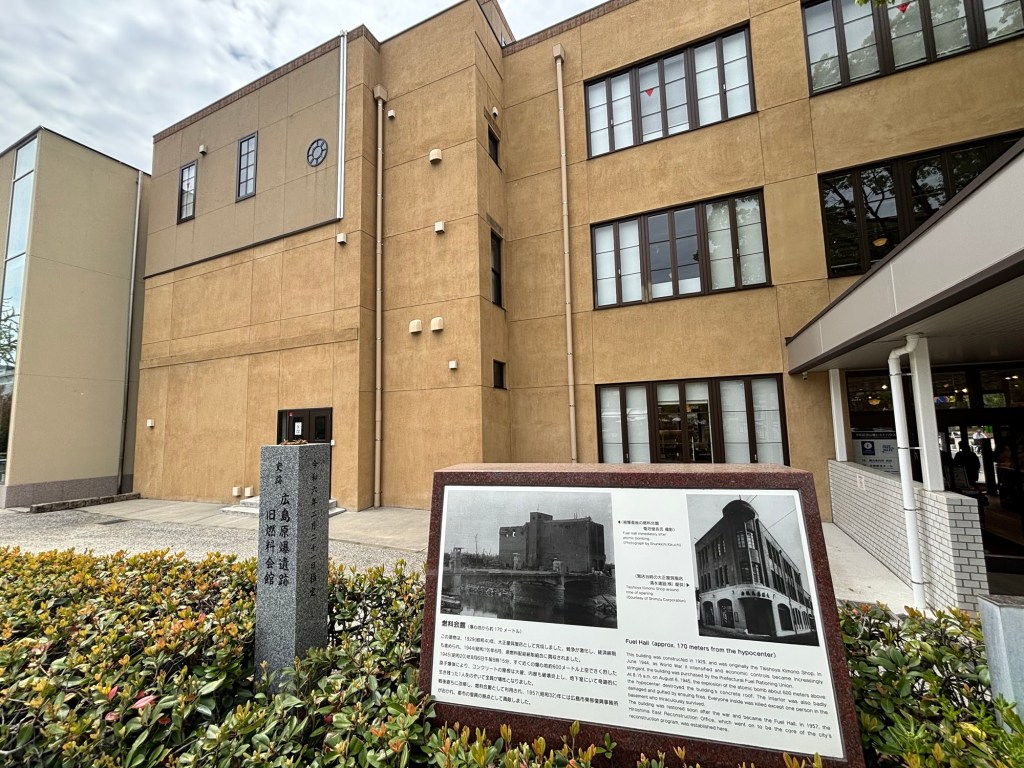
On August 6th, 1945 there were 37 people working in the building and all but one died instantly when the blast went off 170 metres away. Eizo Nomura was 47 at the time and was in the basement that sheltered him from the shockwave, radiation and intense fires. He lived until he was 84 years old.
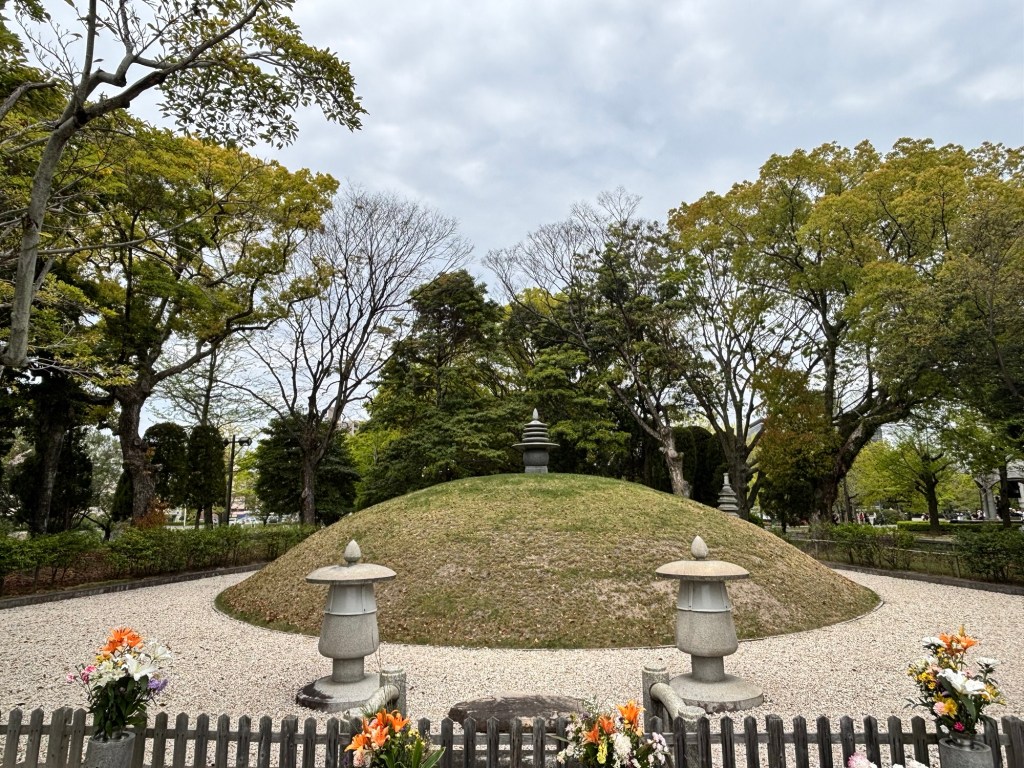
In the Peace Park is the Atomic Bomb Memorial Mound. The mound is made up of the ashes of 70,000 unidentified or unclaimed victims. It really puts it into perspective of how many people just couldn’t be identified due to the enormous power of the bomb.
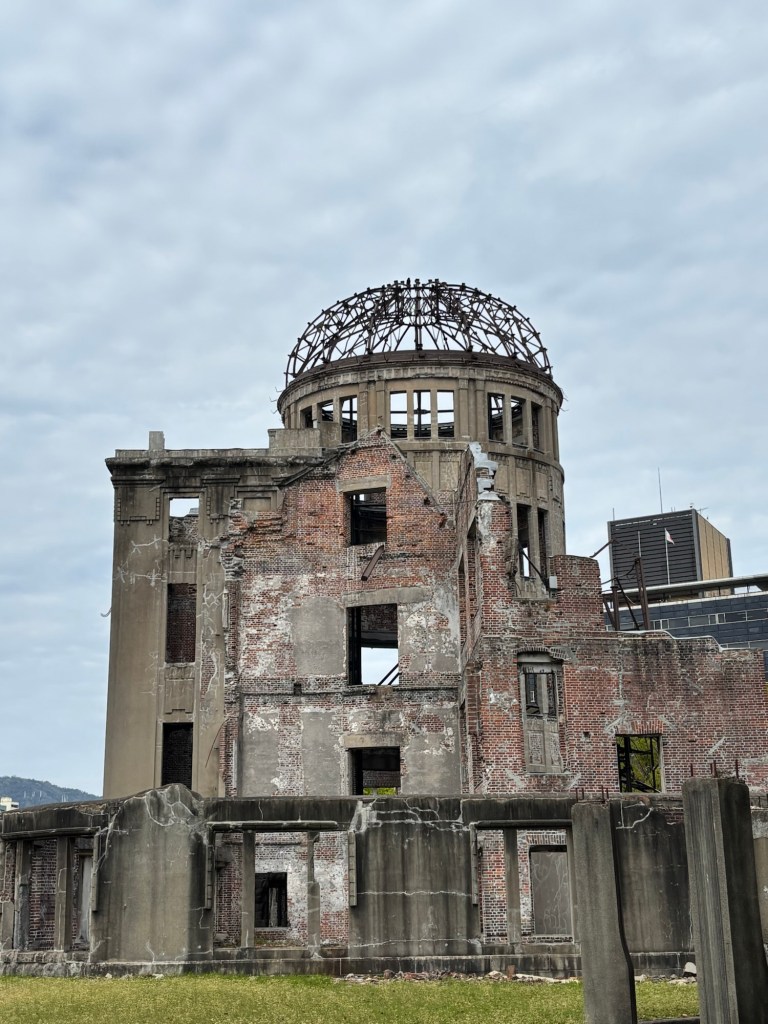
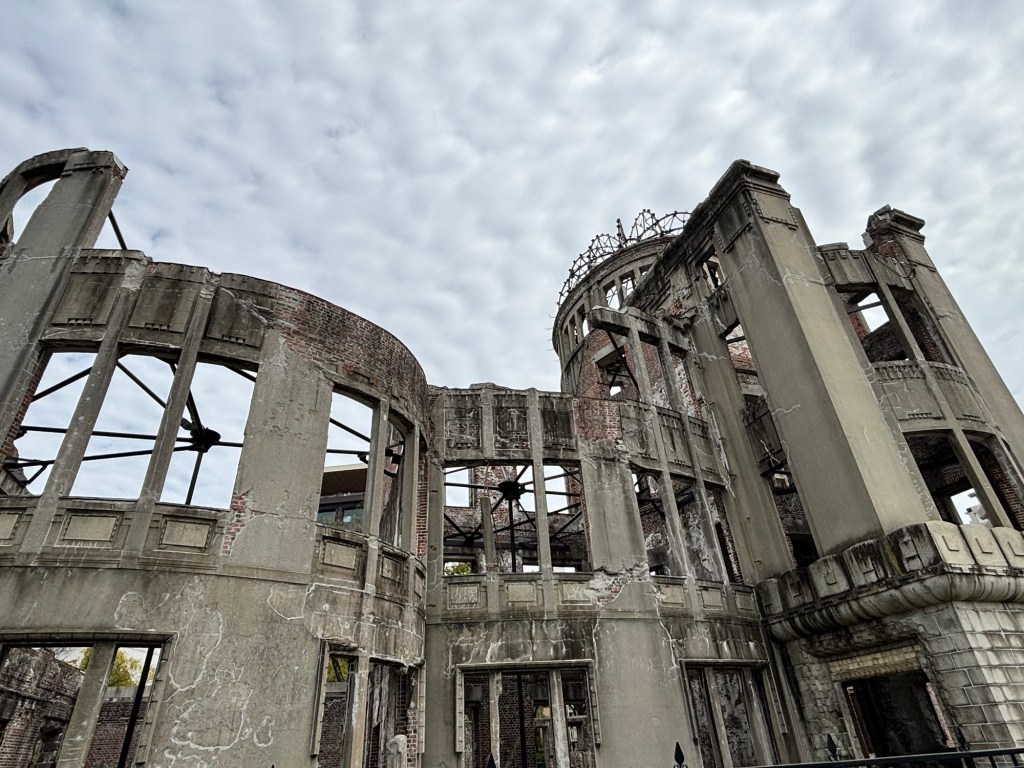
We then went to see the most famous building in Hiroshima, the Atomic Bomb Dome. It’s the skeletal remains of the former Hiroshima Prefectural Industrial Promotion Hall. It was designated as a UNESCO World Heritage Site in 1996.
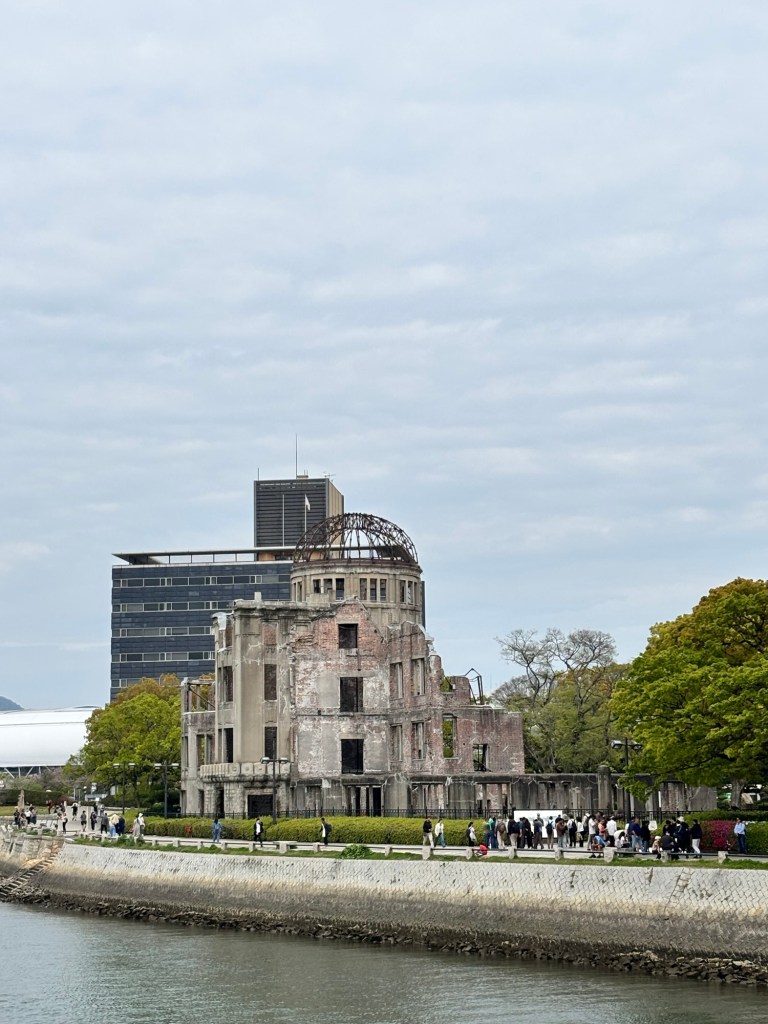
The bomb detonated nearly directly above the building at an altitude of 600m. As it was almost directly below, the vertical force was absorbed by the building’s columns and also its earthquake resistant design helped keep the middle portion standing upright.
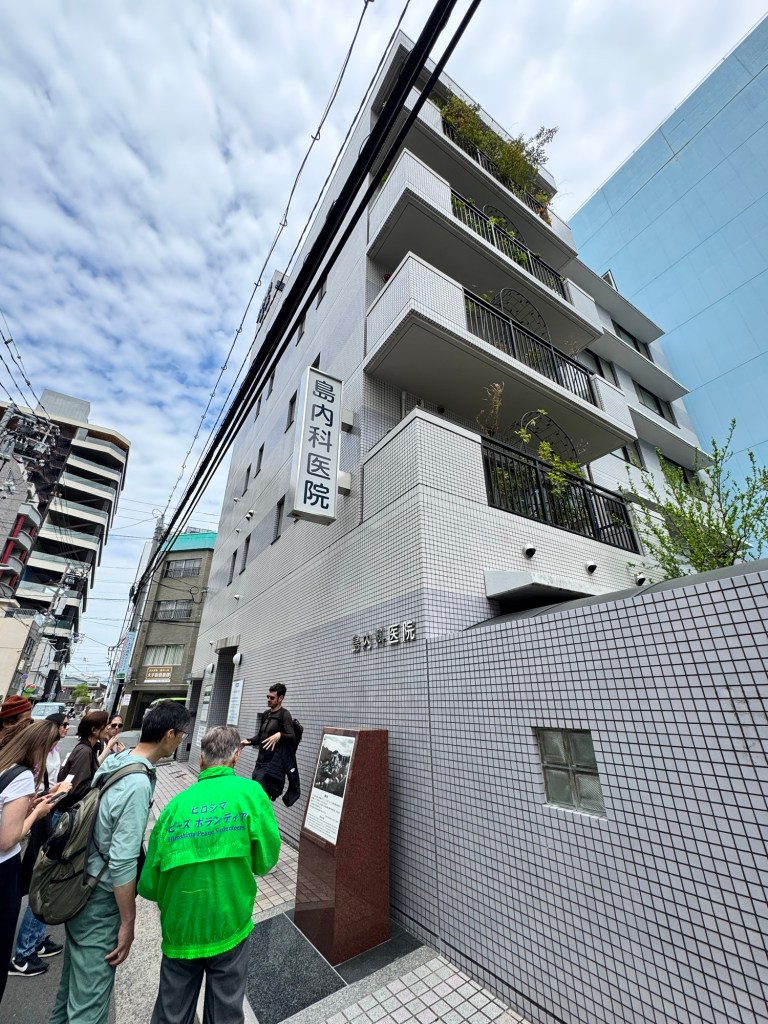
160m away was Shima Hospital which was directly below the hypocenter of the explosion. The hospital director, Dr Shima was away in a nearby town avoiding the blast and later returned on August 7th to treat survivors and eventually rebuilt the hospital on the exact same site in 1948. The hospital continues to operate as a community clinic now run by the third generation of the Shima family.
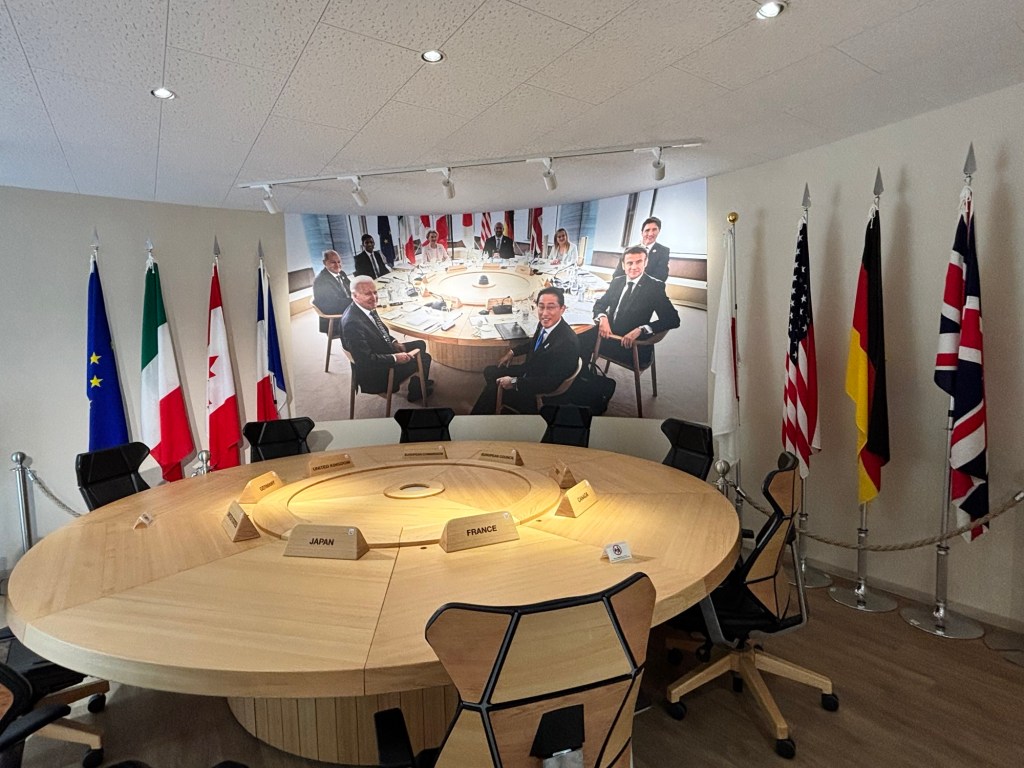
The last place we visited in the park was the G7 Hiroshima Summit Hall. The summit happened in 2023 and the room brings a collection of items used at the summit. Those include the original round table the likes of Joe Biden, Emmanuel Macron and Rishi Sunak sat around.
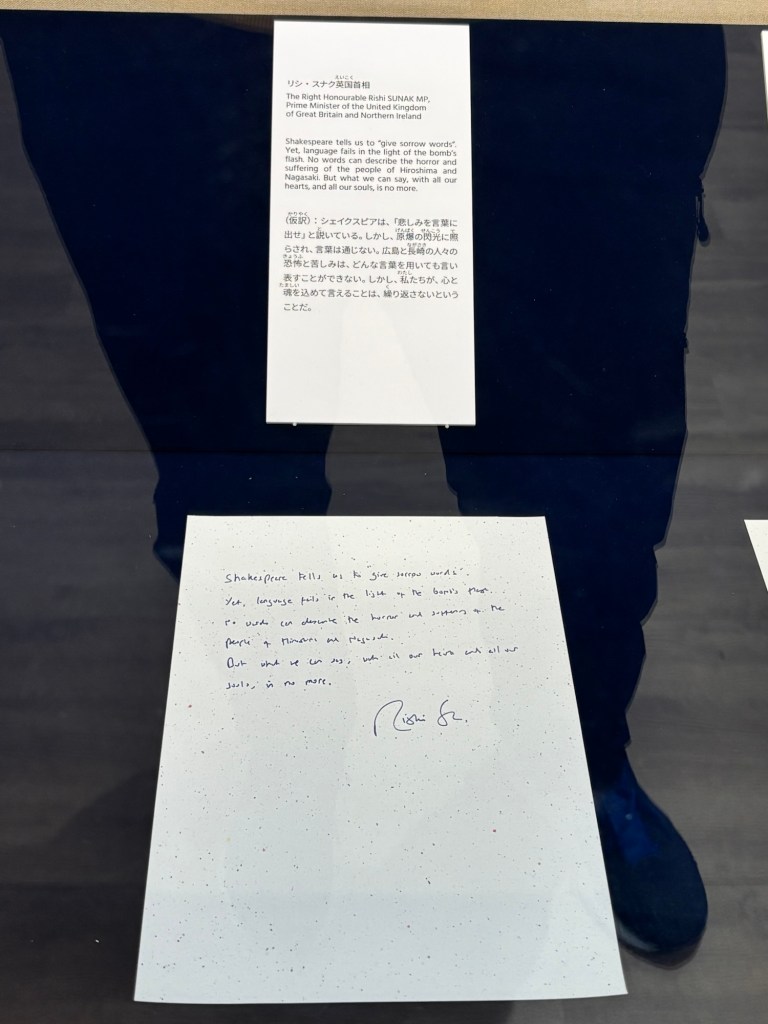
There were also many letters from all the leaders and their partners on how the visit to Hiroshima affected them and how the world should never let it happen again.
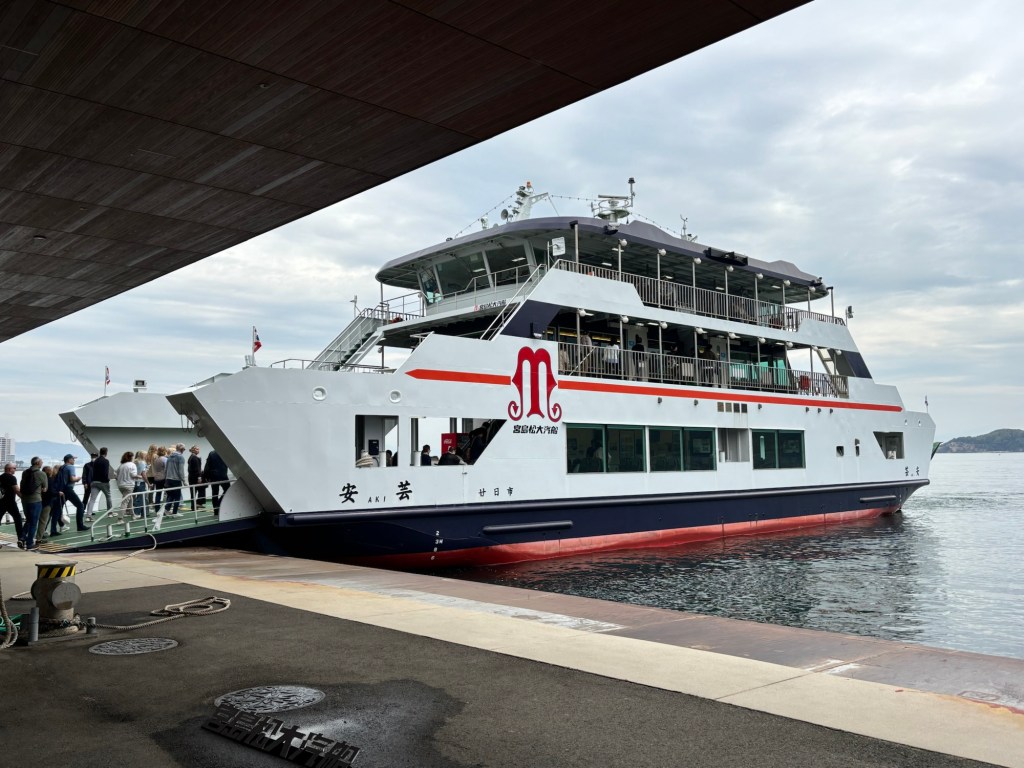
The second place we wanted to see when in Hiroshima was actually an island called Miyajima. We got a local train to the port which took about 50 minutes from the city centre and then hopped on the ferry which was only around a 10 minute trip.
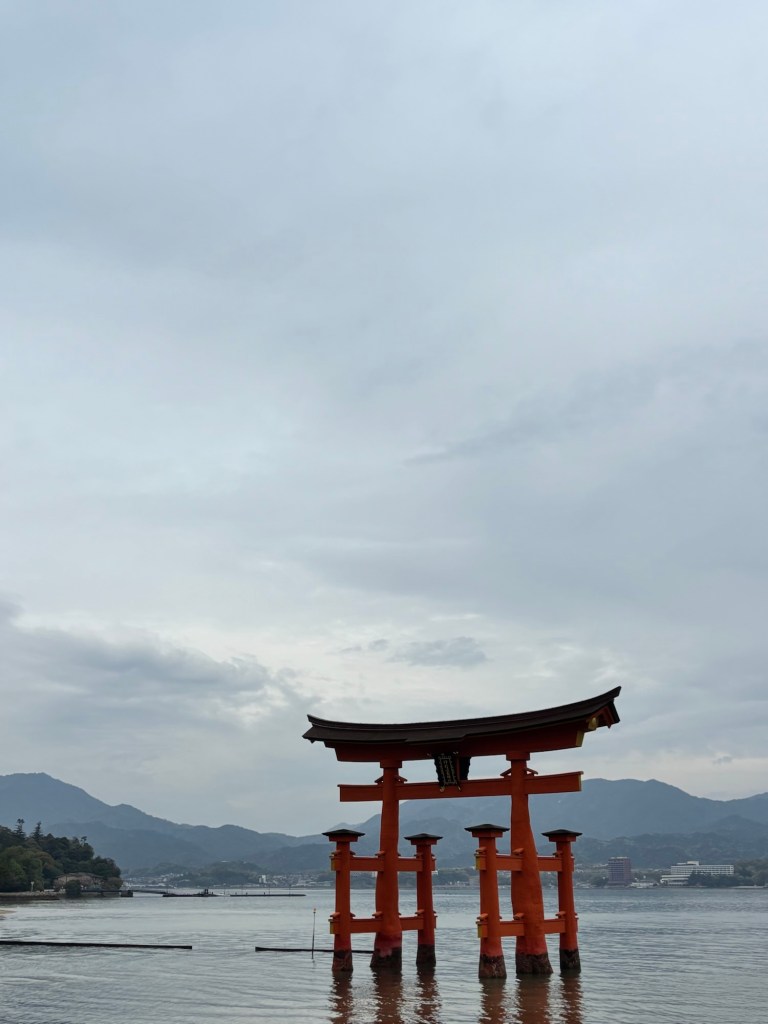
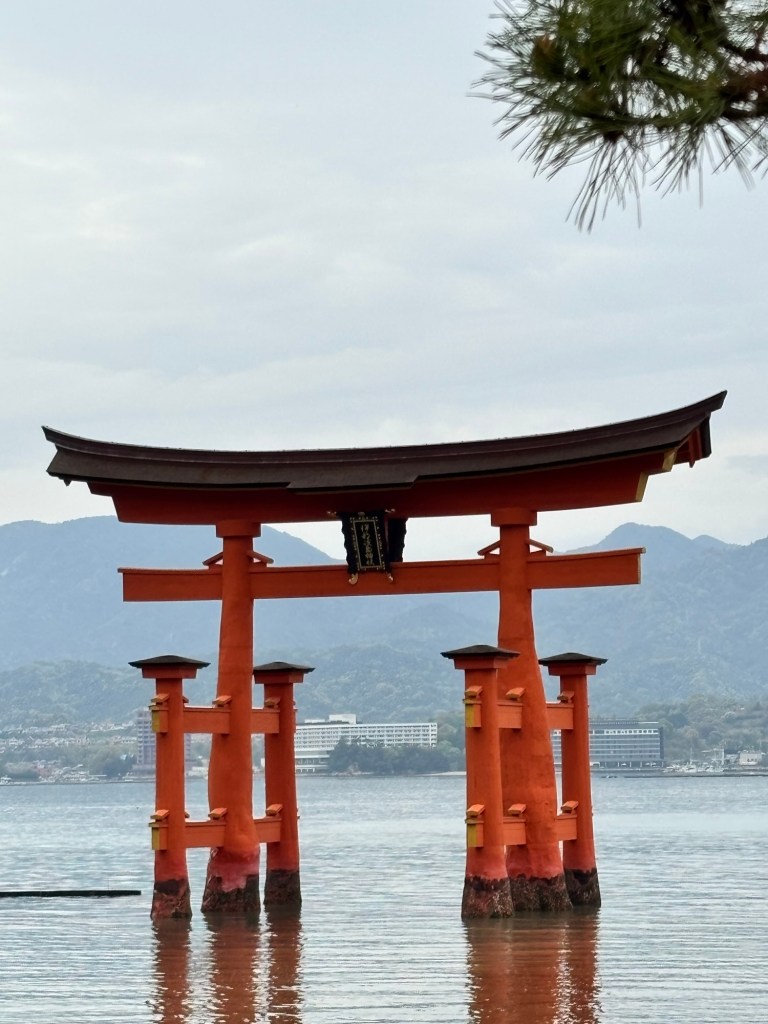
Miyajima is world famous for the Itsukushima Shrine which is a UNESCO World Heritage Site and is consistently ranked in the top 3 scenic views in Japan. The Shrine has been rebuilt at least eight times over its history with the first being built in 593CE.
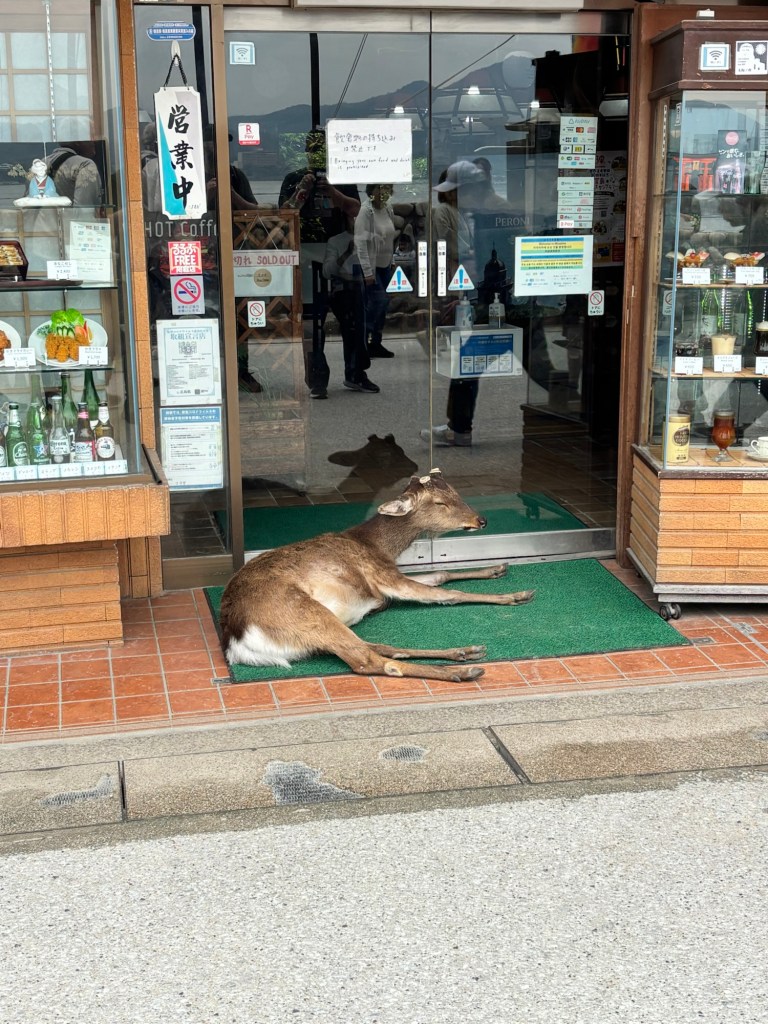
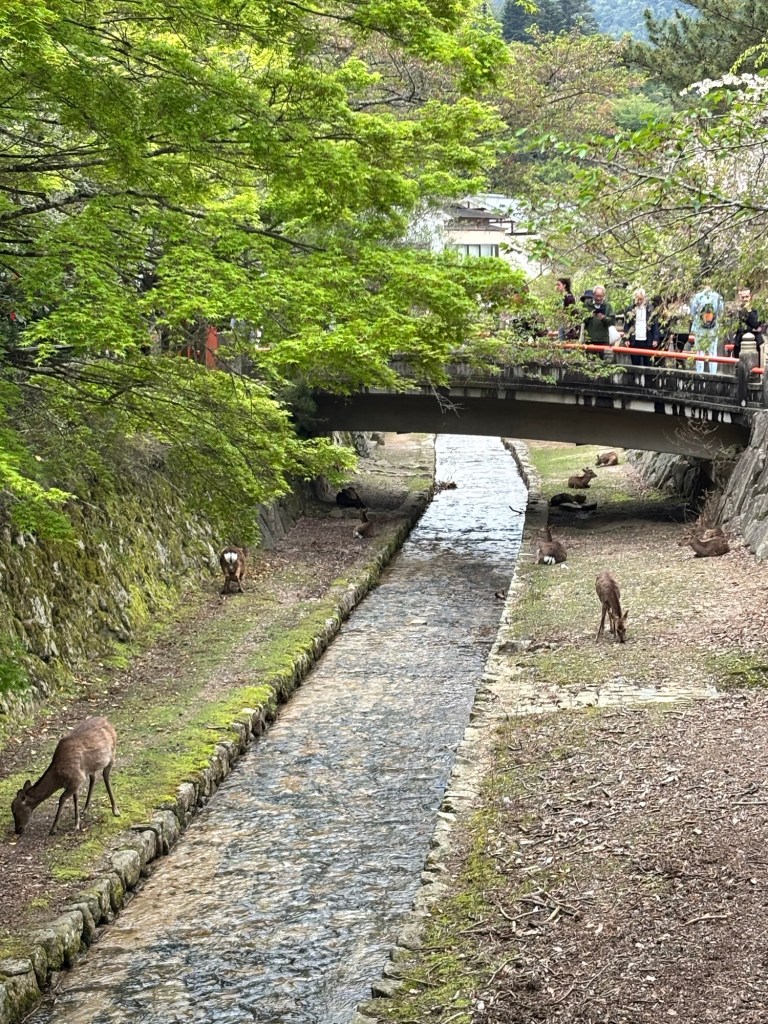
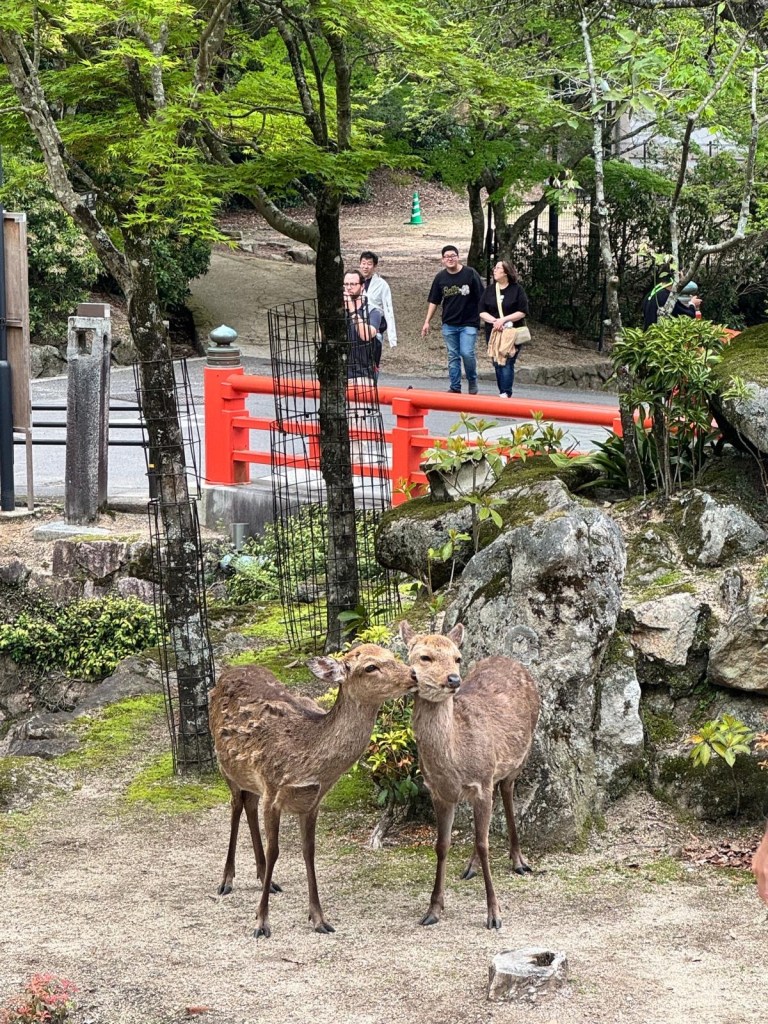
All across the island we came across the very friendly wild Sika Deer. They are considered sacred messengers of the Gods by Japanese people. It’s very entertaining to see them trying to take people’s food as soon as they try to eat…
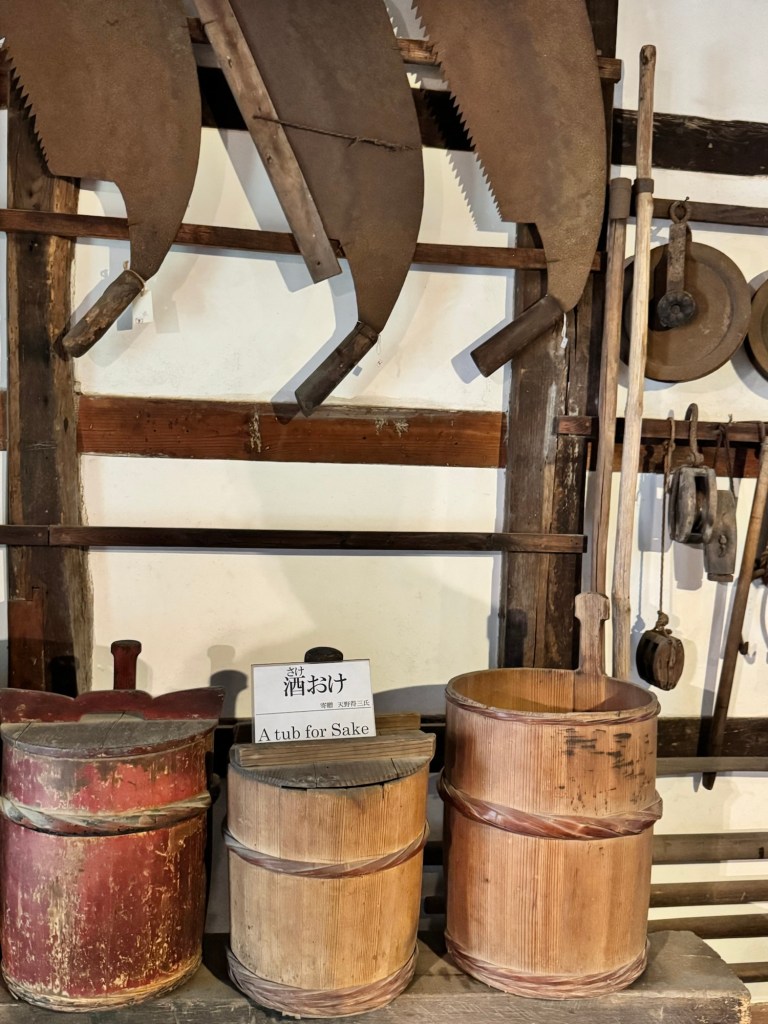
Our next stop was the History and Folklore Museum which has 3,000 artefacts which are preserved in a 19th century former soy sauce merchant’s residence. The objects on display were varied and included a large money safe, a rickshaw traditionally used to transport people around the island and also tubs for Sake.
We then went to Daisho-in Temple complex which is located at the foot of Mount Misen. The first thing we saw were the 500 Rakan statues, which represent the disciples of Shaka Nyorai (the historical Buddha) who attained enlightenment.
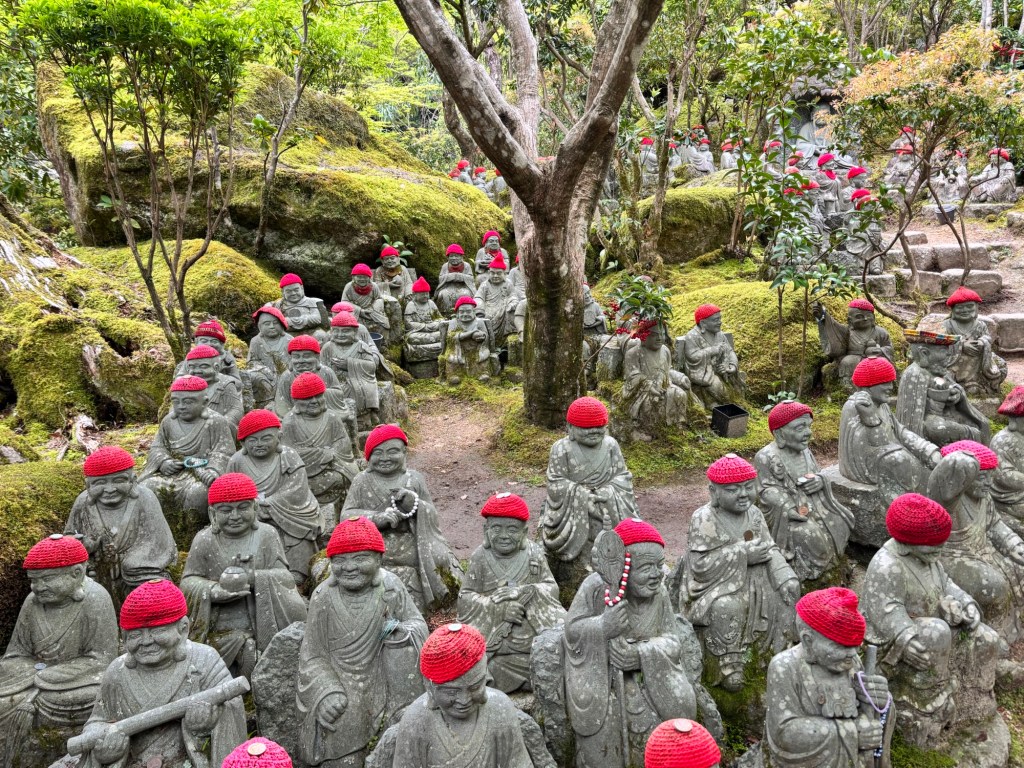
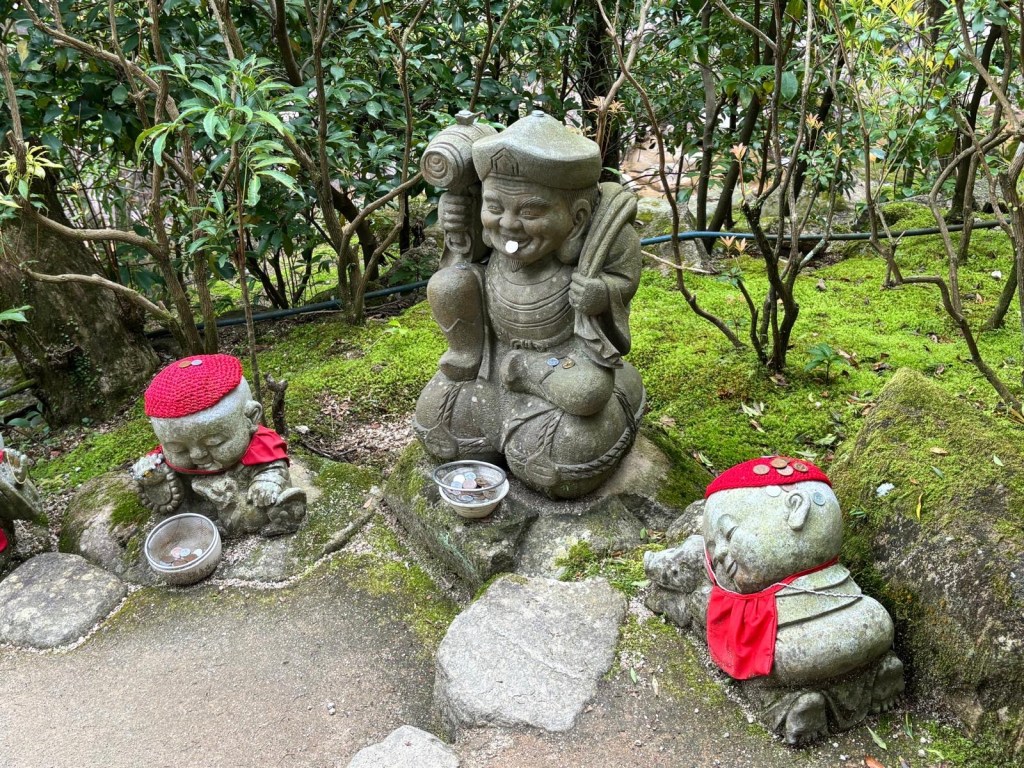
Every single statue has a different facial expression and they also all wear a knitted red hat to show respect and to “keep the statues warm”. Many people leave a few coins on the statues as an offering for good luck.
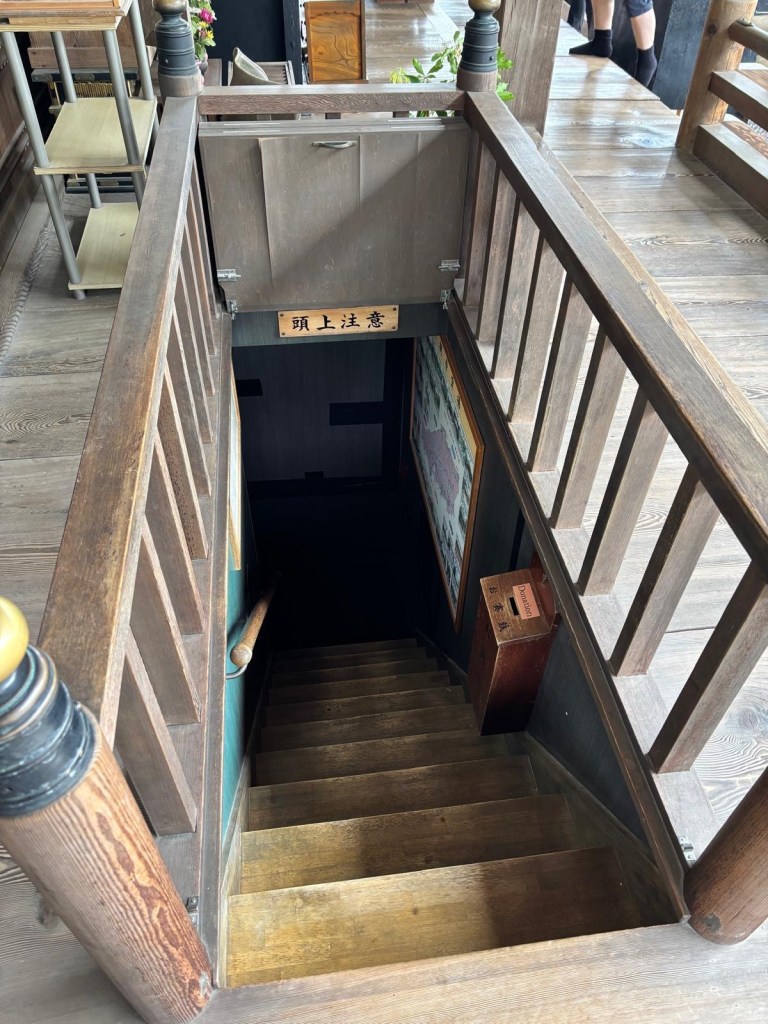
Next we saw the Kannon-do Hall which is the main prayer hall in the complex. Before going into the hall we walked through the pitch black underground walk-way which is a spiritual experience known as Kaiden-meguri. It is supposed to be a process of spiritual purification and rebirth. You can’t see anything so have to use the wall to guide yourself through. A very unique experience!
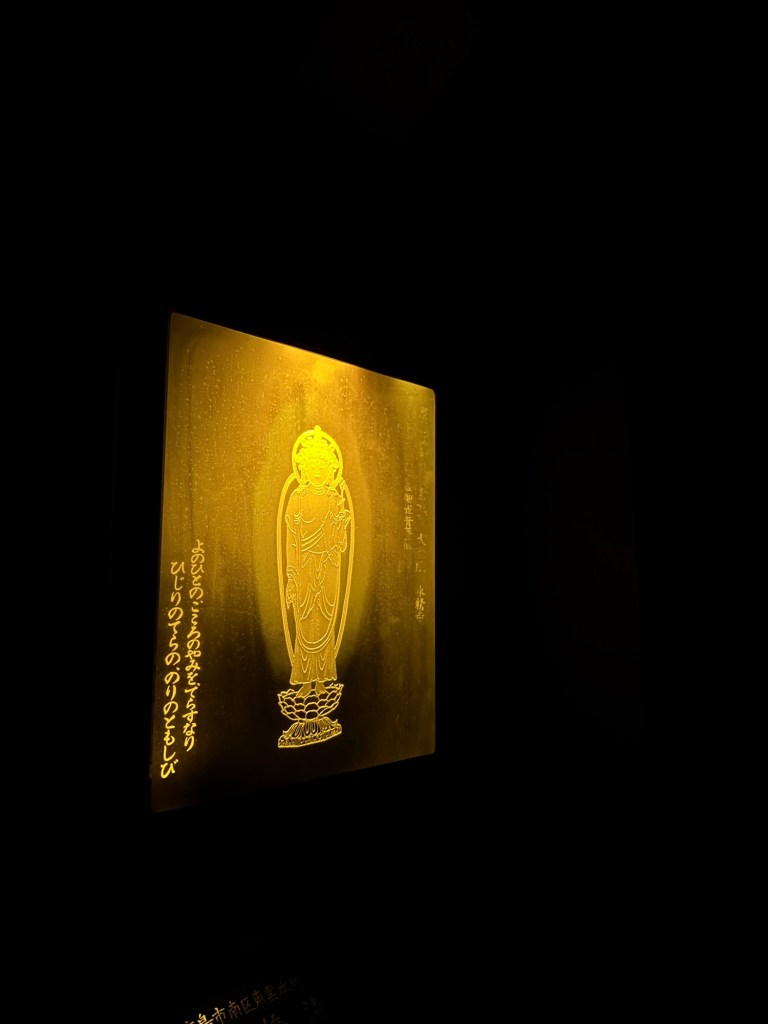
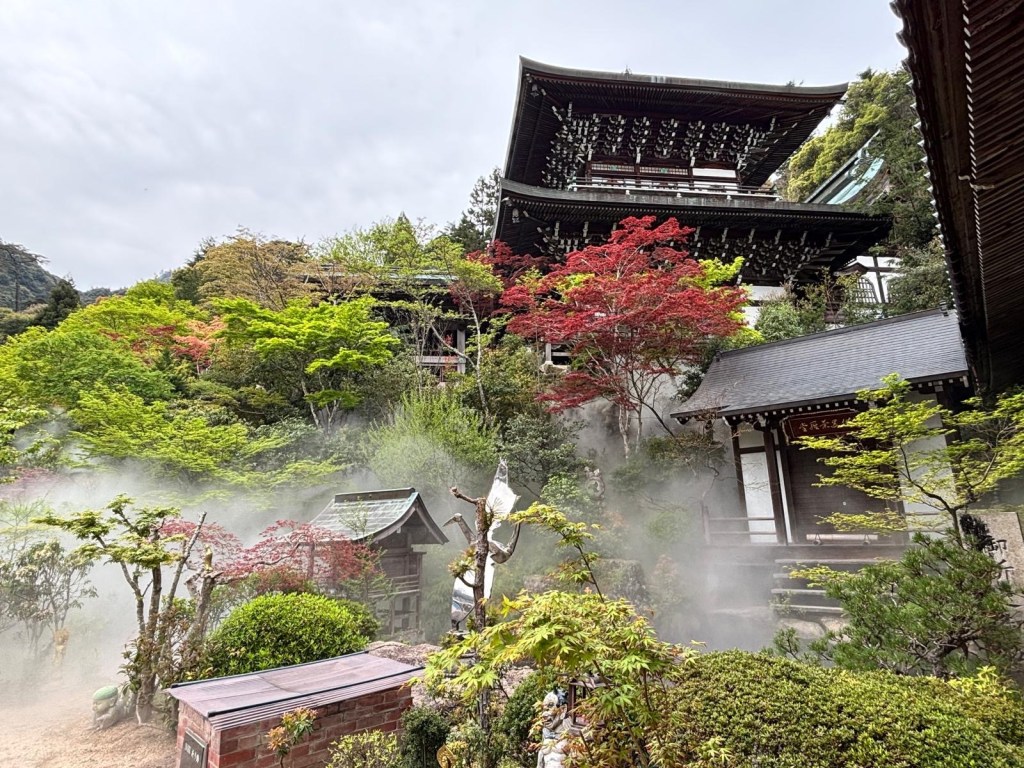
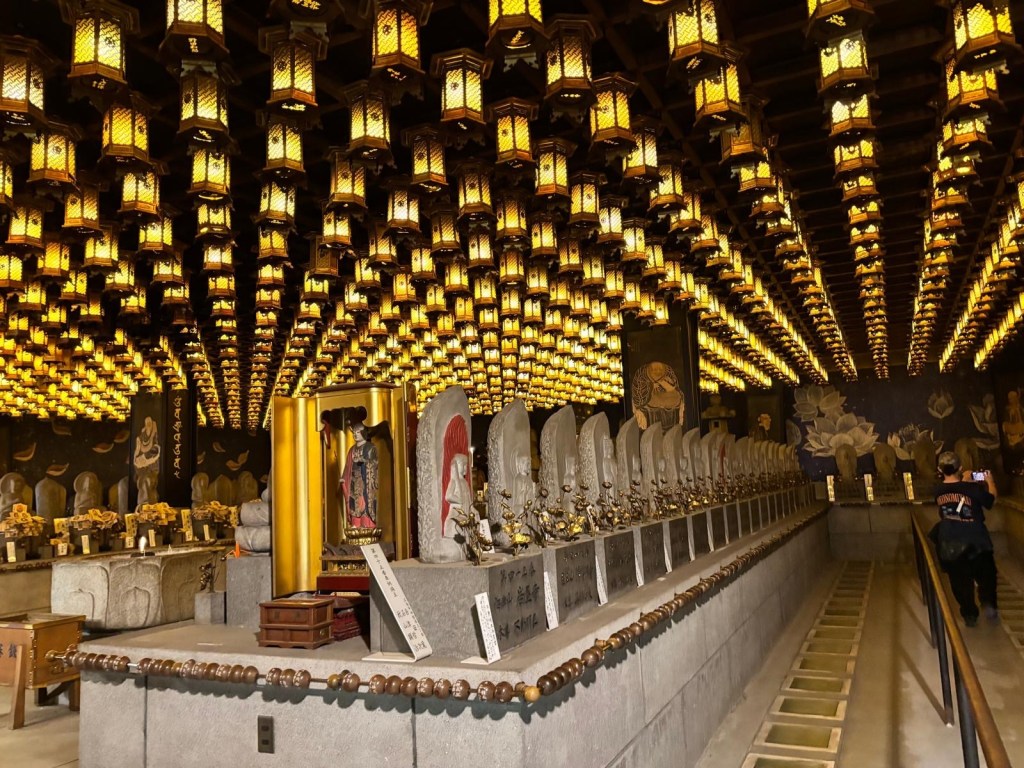
We then went inside the Henjokutsu Cave. There are 88 Buddhist icons representing each of the 88 temples of the Shikoku Pilgrimage. The ceiling is covered in hundreds of glowing golden lanterns which are symbols of light and wisdom in a dark world.
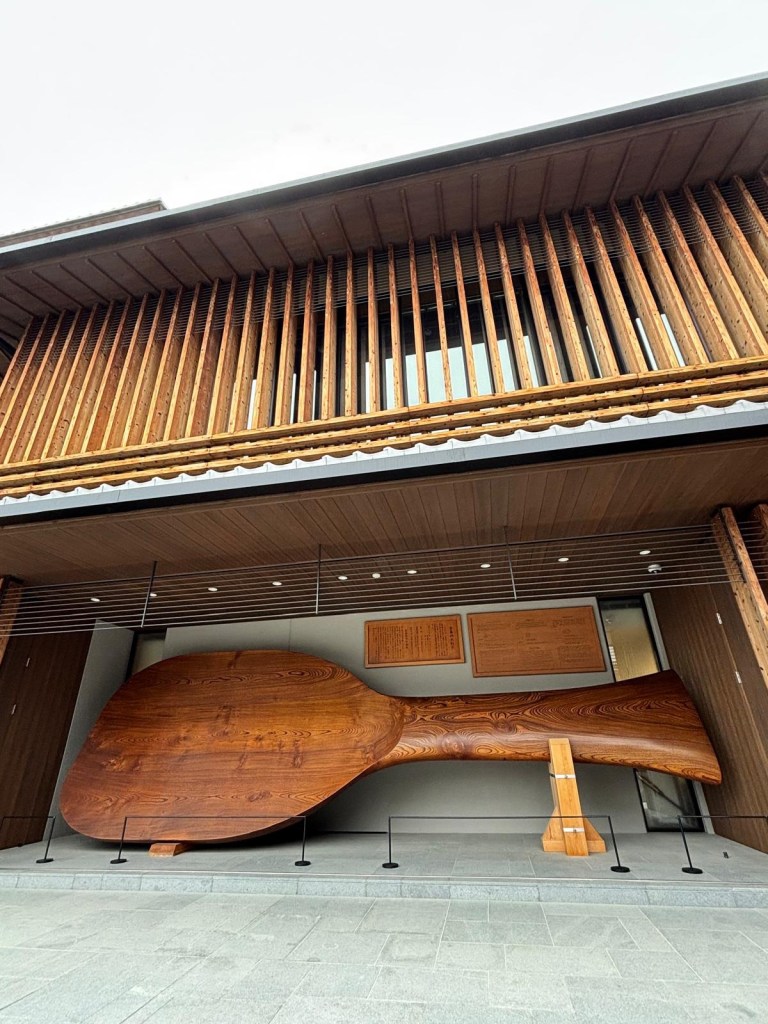
Before leaving the island we had to check out the world’s largest rice scoop! It’s absolutely massive at 7.7 metres long and weighs 2.5 tons. It was carved from a single, 270 year old Japanese Elm tree.
On the walk back down to the port we came across a very tired deer making its way up hundreds of steps… so surreal how friendly they are.
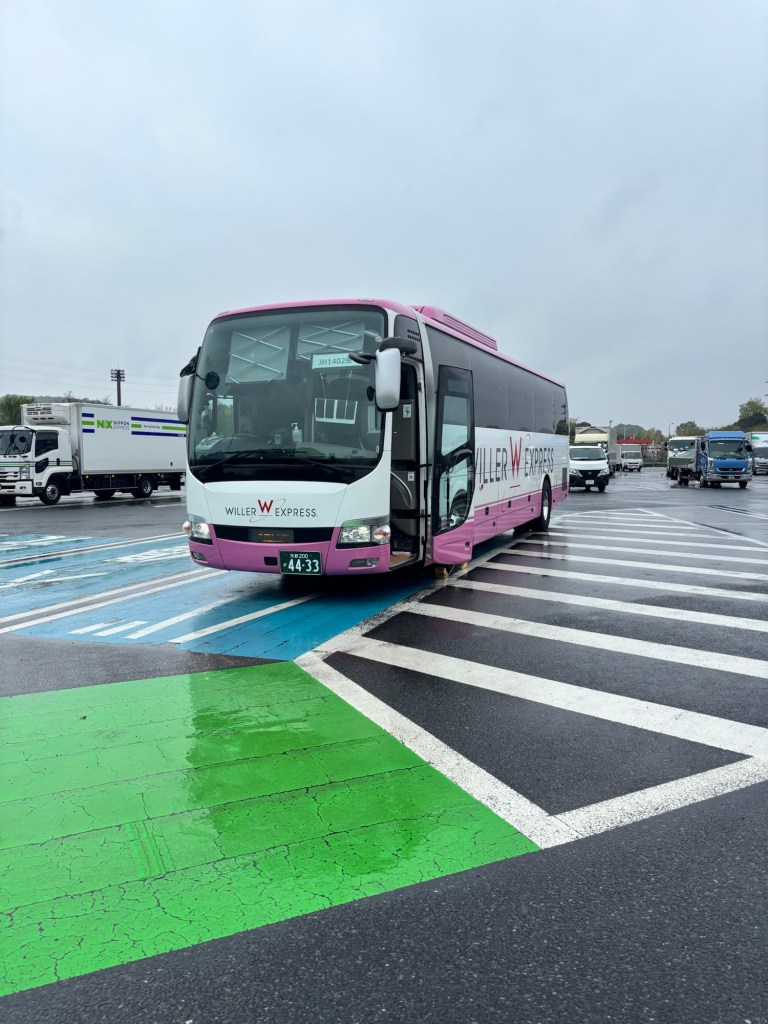
This morning we got a bus from Hiroshima to Osaka that took 6 hours. Again it was very comfy and about a third of the price of a train!
Osaka is Japan’s second largest metropolitan area and is known as ‘Japan’s Kitchen’. We’re here for 6 nights and have lots to explore!
 LittleSandyBeach
Leave a comment