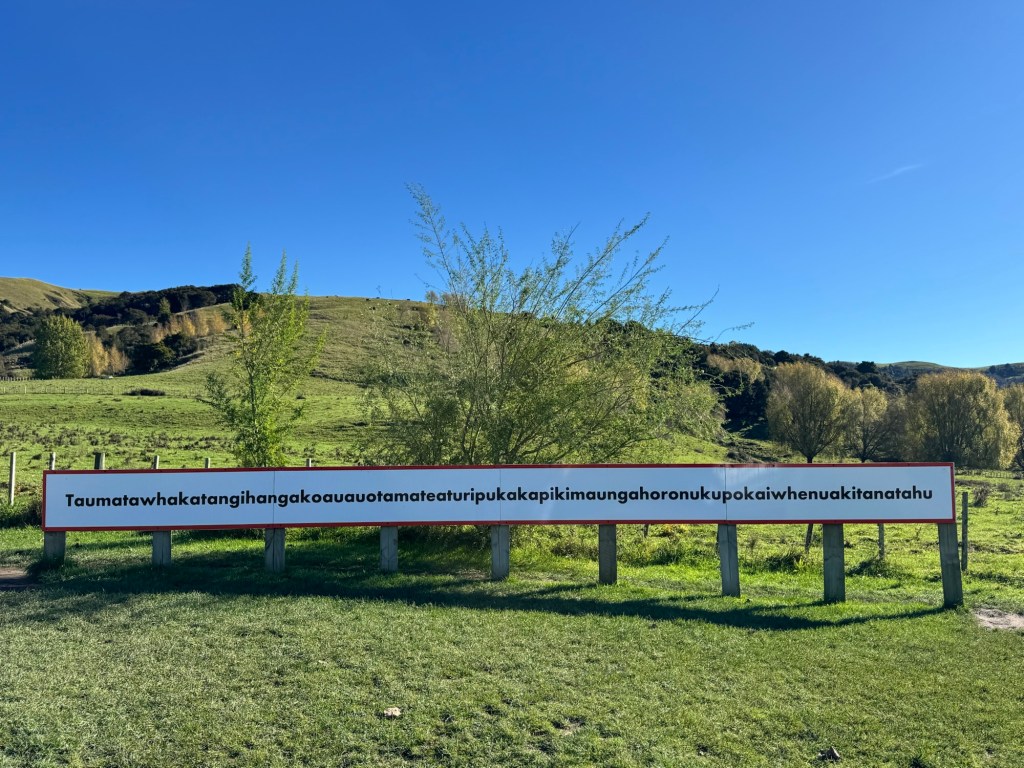
On the drive up to Lake Taupo we made a detour to the place with the longest name in the world:
Taumatawhakatangihangakoauauotamateaturipukakapikimaungahoronukupokaiwhenuakitanatahu!
It is an 85 letter Māori name for a hill found in Hawke’s Bay. There wasn’t many people around other than some more sheep and cows however it was very lovely.
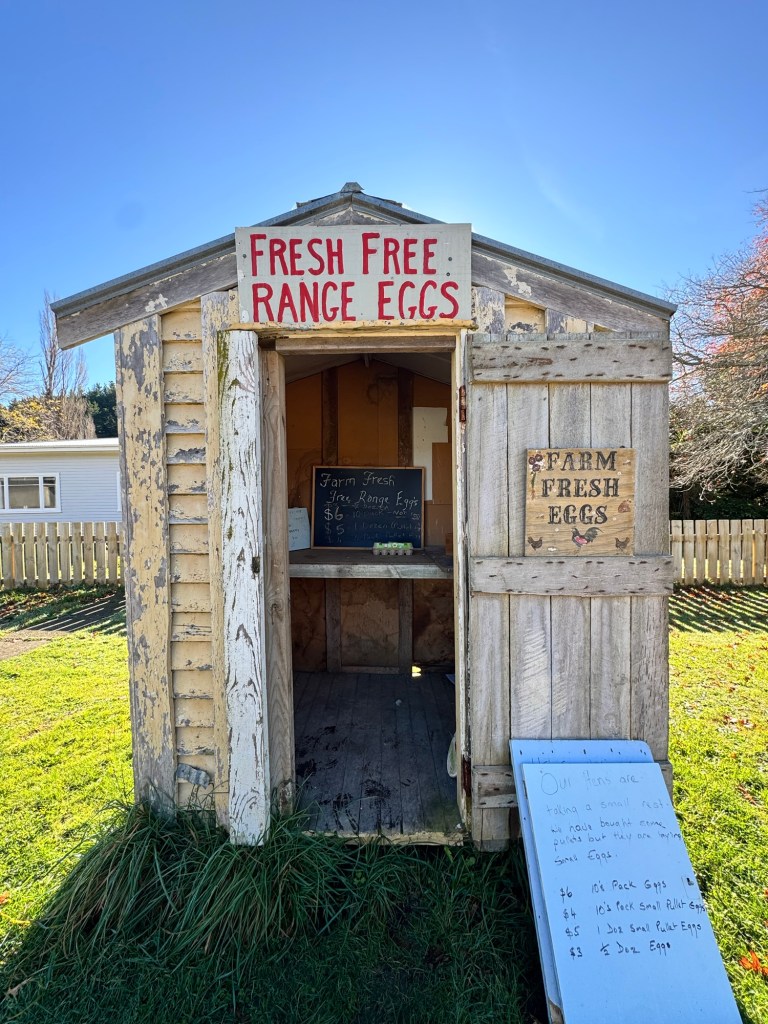
We also came across a small shed outside a farmstead selling fresh local eggs. We of course had to try some out and they were extremely yummy.
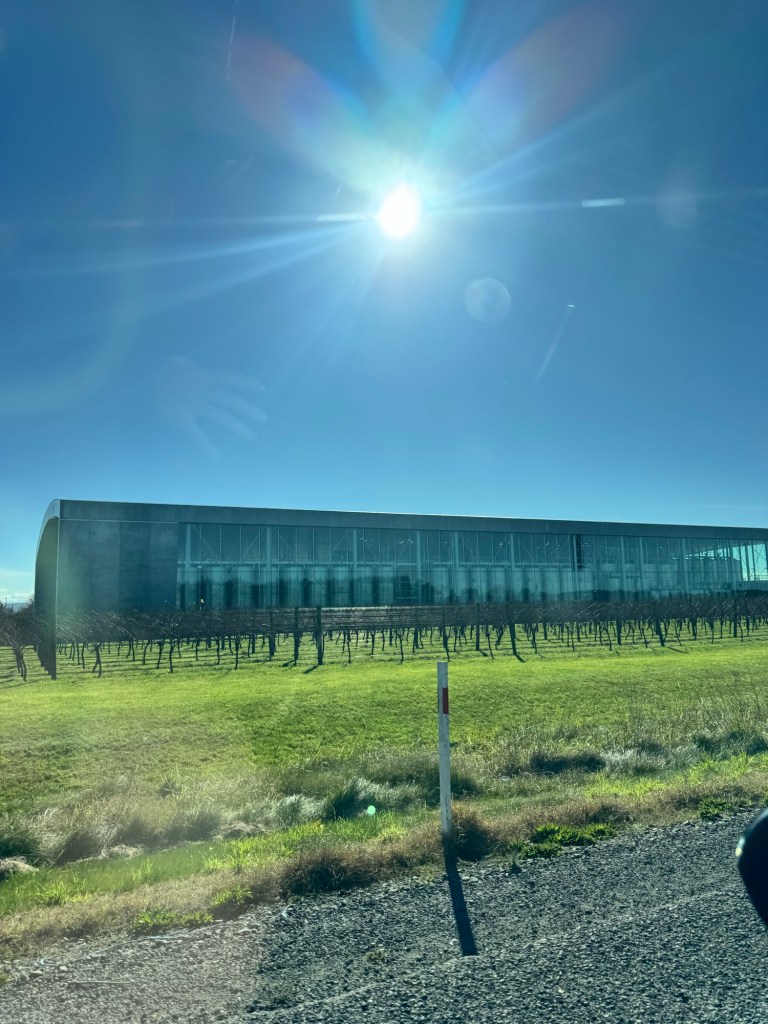
Most of the drive was through the Hawke’s Bay region which is a world famous area known for its wine production. It is the second largest wine region in New Zealand after Marlborough and has over 90 operating wineries.
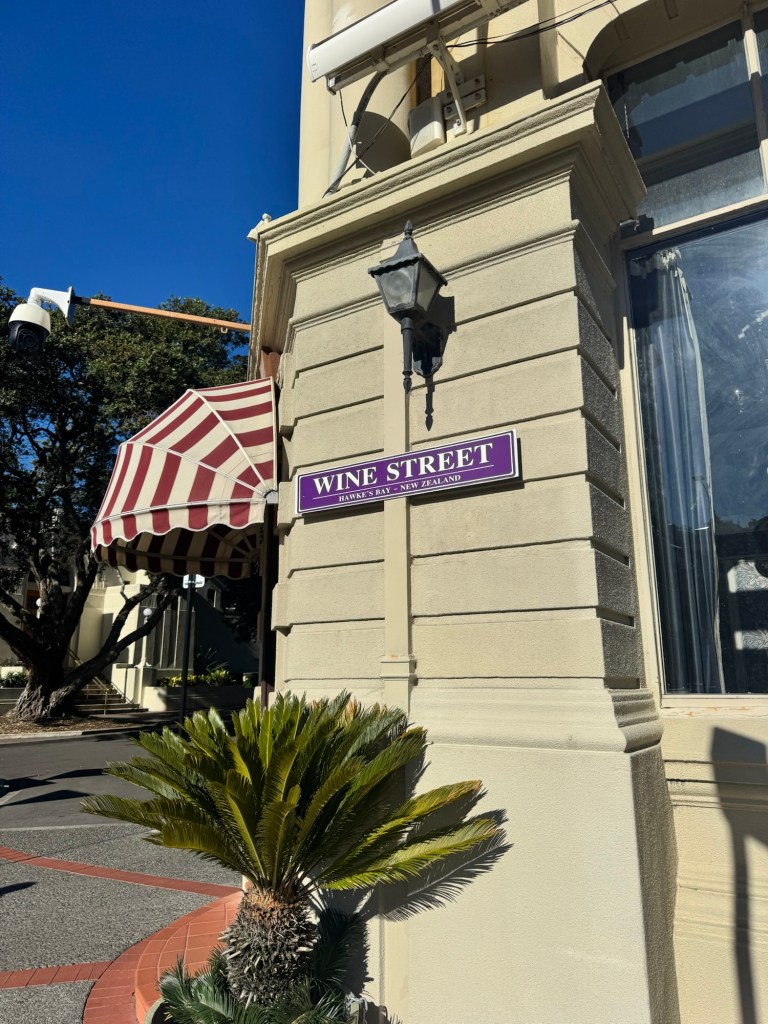
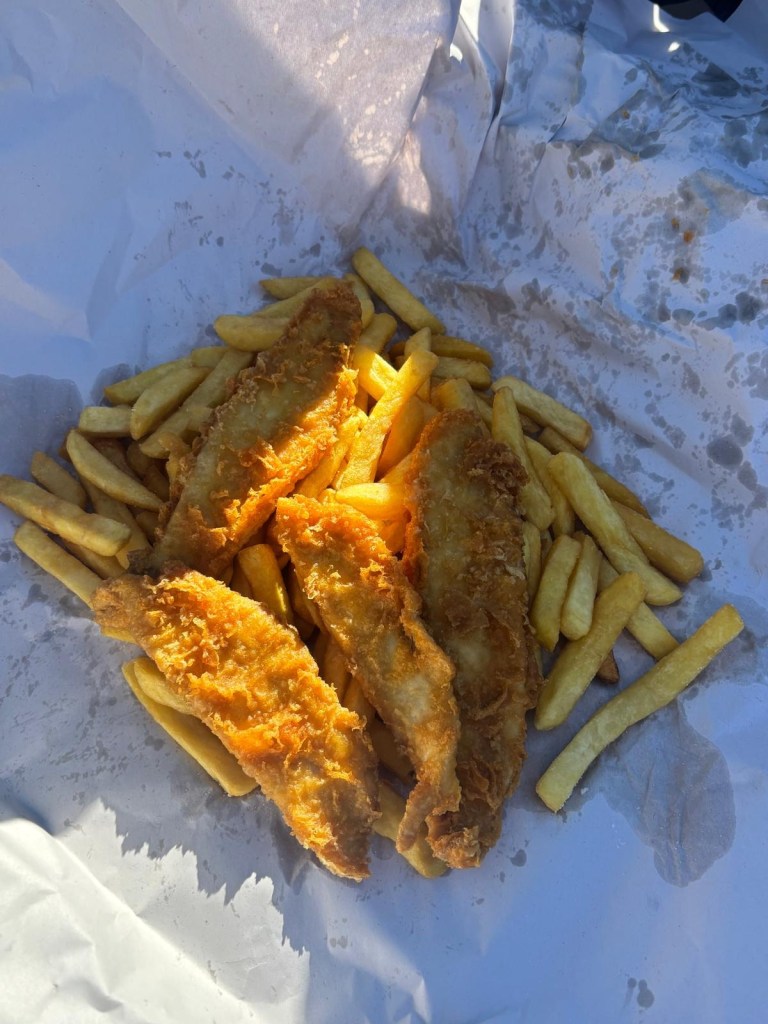
We then made a pitstop for lunch in the coastal city of Napier. It is known for its art deco buildings which were built after most of the city was destroyed by an earthquake in 1931. We found a highly rated fish and chips and tried the fish of the day. We weren’t quite sure what the fish was but it was very tasty!
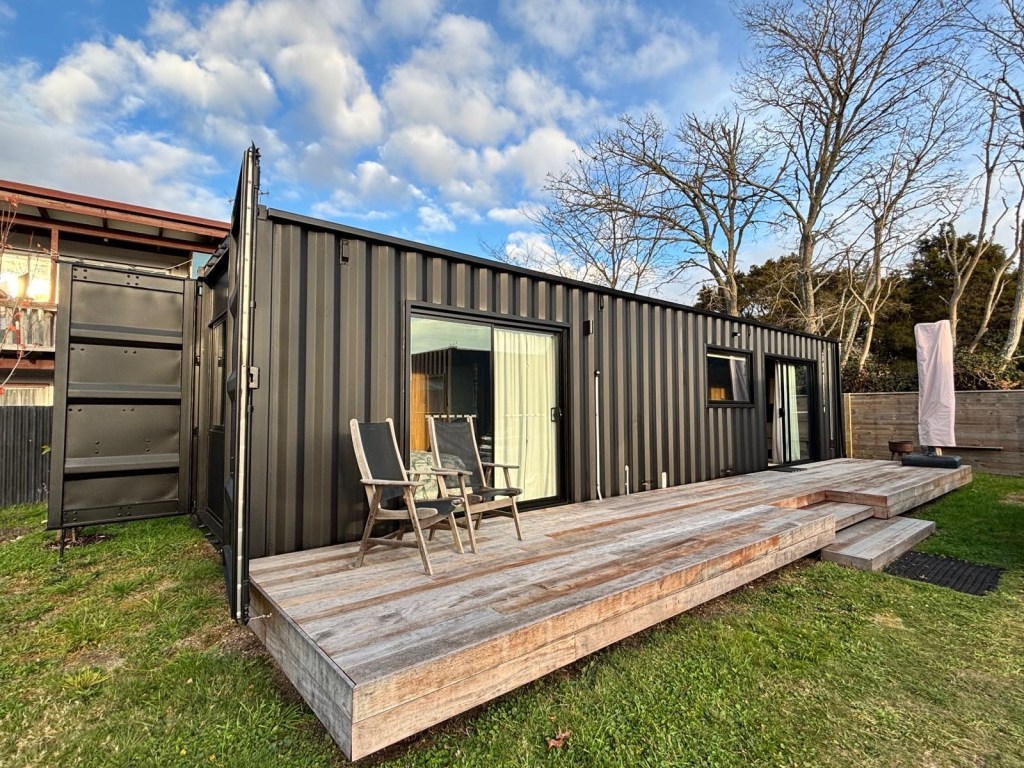
After a 7 hour journey we finally made it to our shipping container accommodation just on the shore of Lake Taupo.
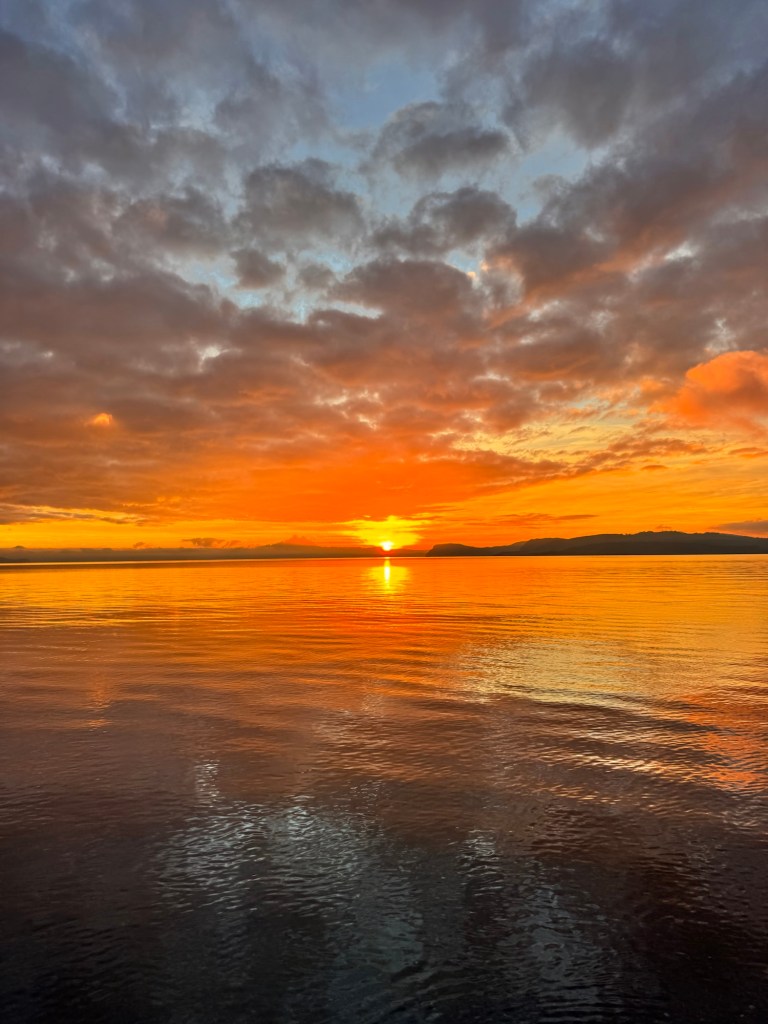
Just a couple of minutes away we watched the sunset by the lake which was fantastic. Lake Taupo is New Zealand’s largest lake covering 616 square kilometres – and it’s roughly the size of Singapore! It was formed over 20,000 years ago within a volcanic caldera.
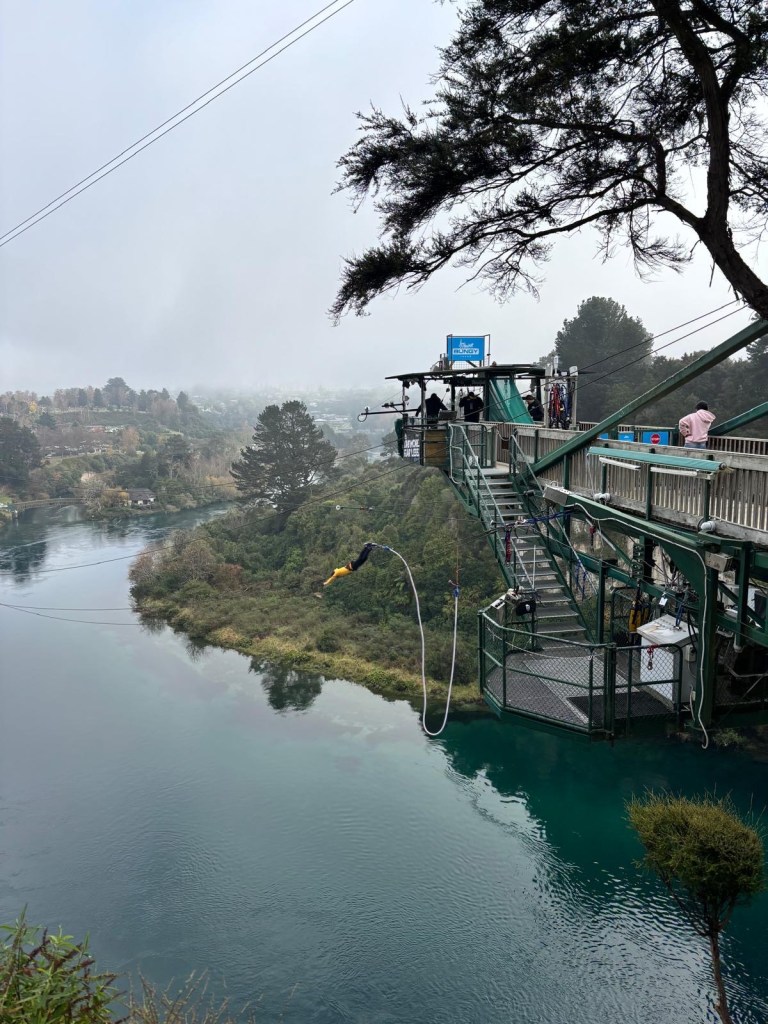
The next morning, Harry went to go tick off a bucket list activity – Bungy Jumping! New Zealand is home to some of the best places to Bungy jump in the world and AJ Hackett was the first company to commercialise the activity.
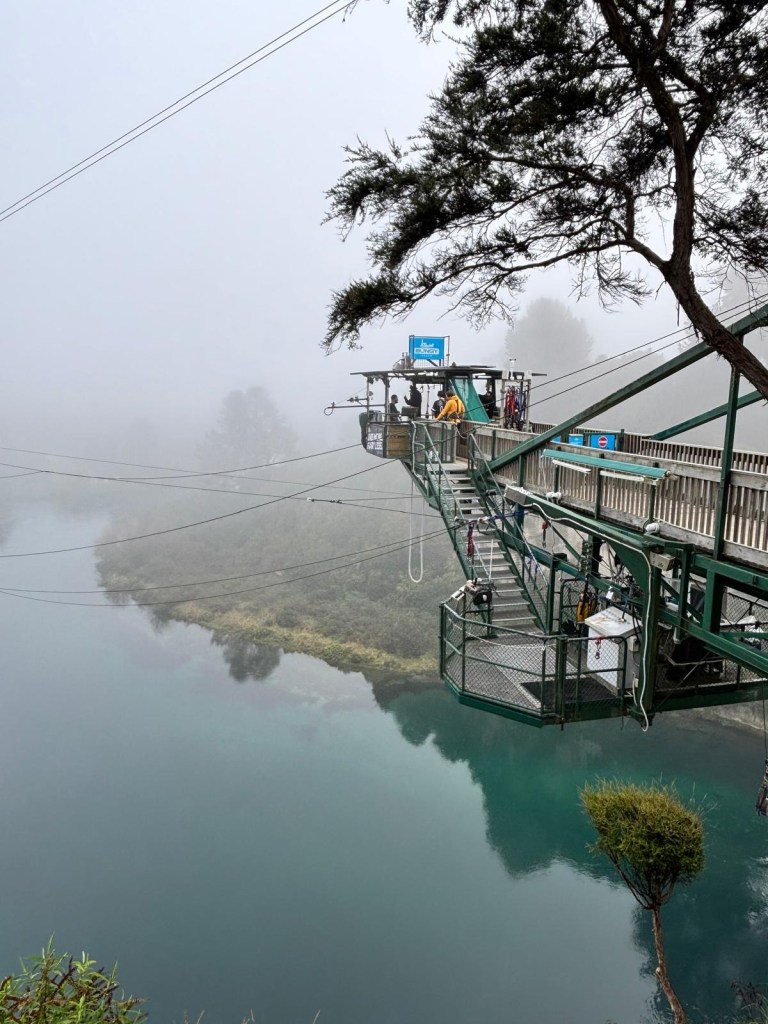
After getting all geared up and to prolong the nerves even more the recovery boat that is used to get people off the bungy cord broke down! Luckily after 20 minutes they replaced the engine and it was time to take the leap.
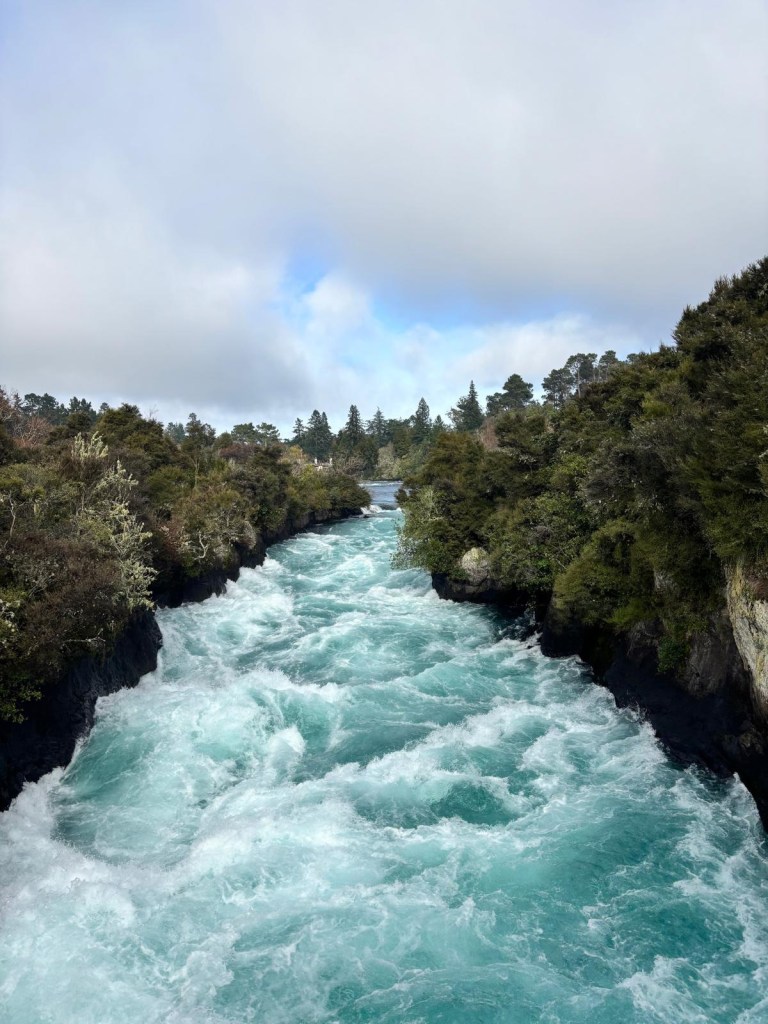
After the adrenaline fuelled morning we then went to see Huka Falls. The waterfall is on the Waikato River (New Zealand’s longest river) which drains out of Lake Taupo. It only drops 11m but is famous for the massive volume of water forced through a narrow volcanic canyon that is just 15 metres across. Every single second, 220,000 litres of water passes over the falls – enough to fill an Olympic size swimming pool in 11 seconds!
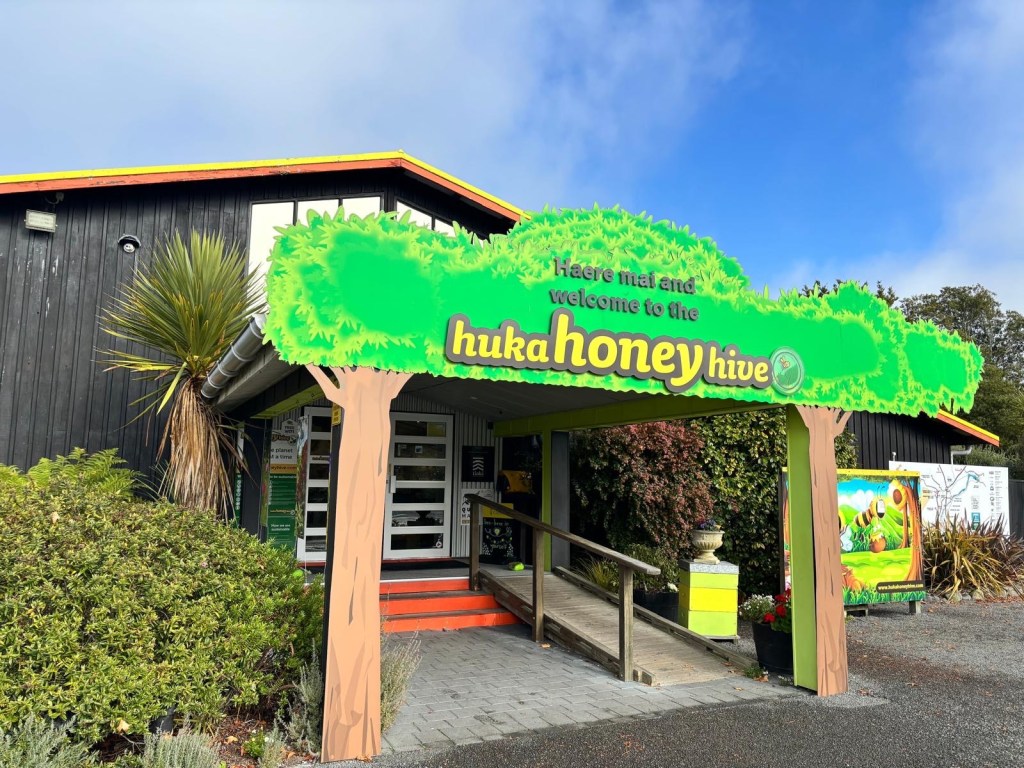
Another short drive away was Huka Honey Hive. Here you can sample many different honeys from all across New Zealand.
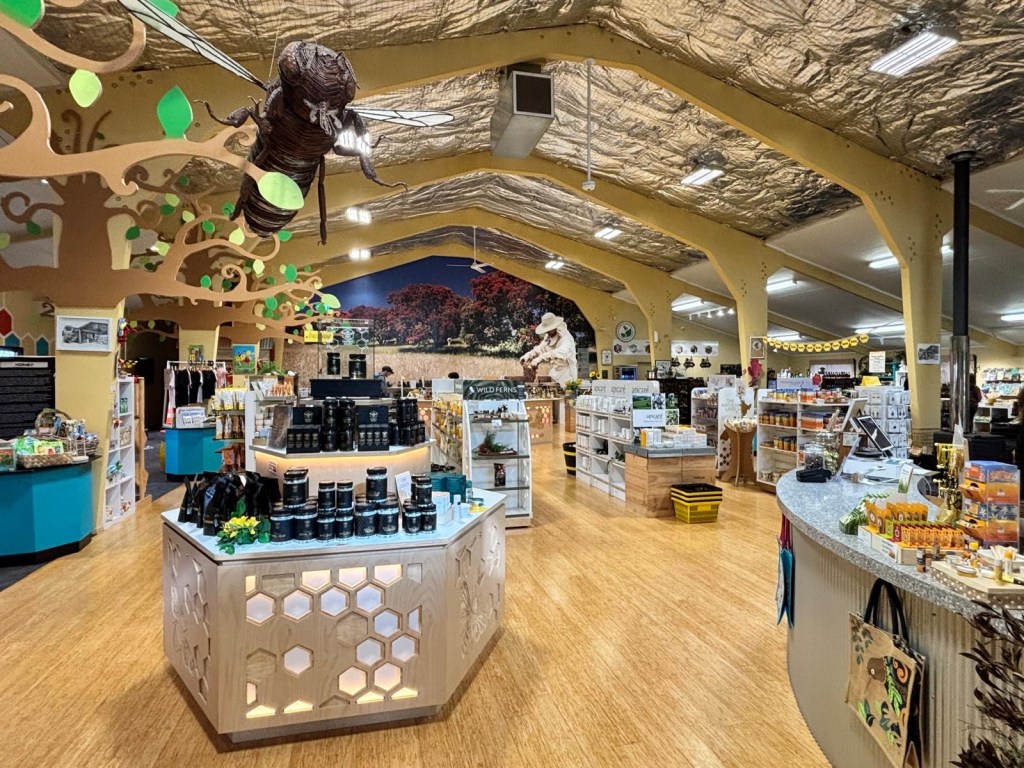
Authentic Manuka Honey sold anywhere in the world is only produced in New Zealand where the bees pollinate the native Manuka bush. In the store there was everything honey related including skincare, ice cream, condiments, alcohol and much more.
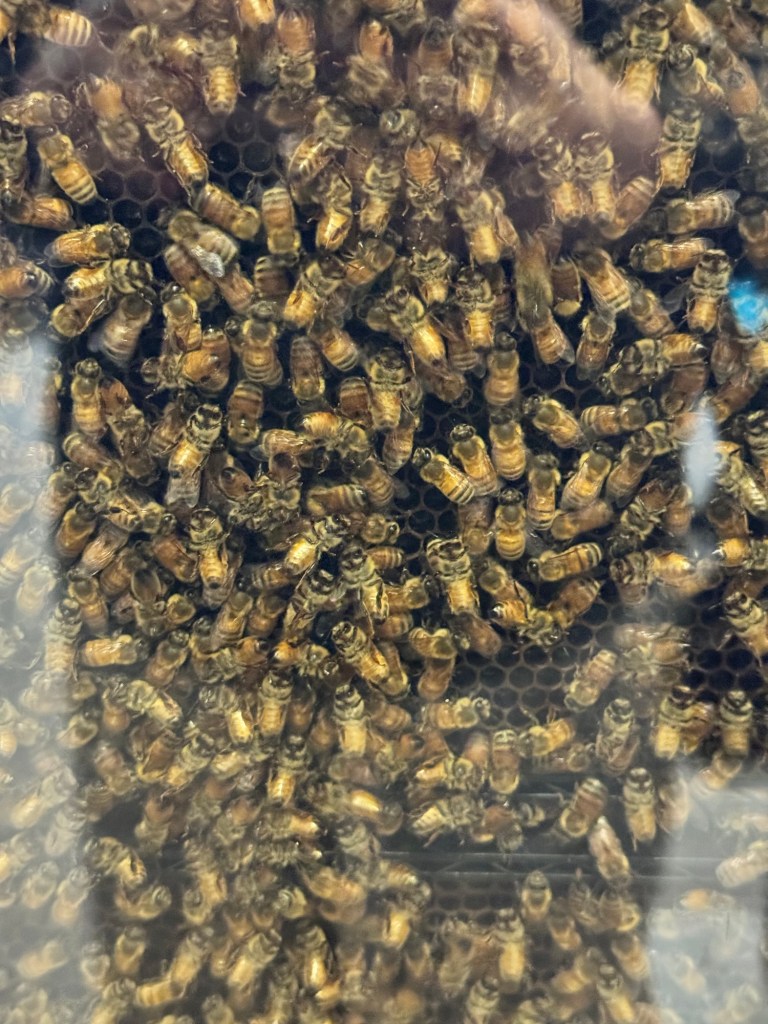
They also have a wall of active hives where you can watch the bees work their magic!
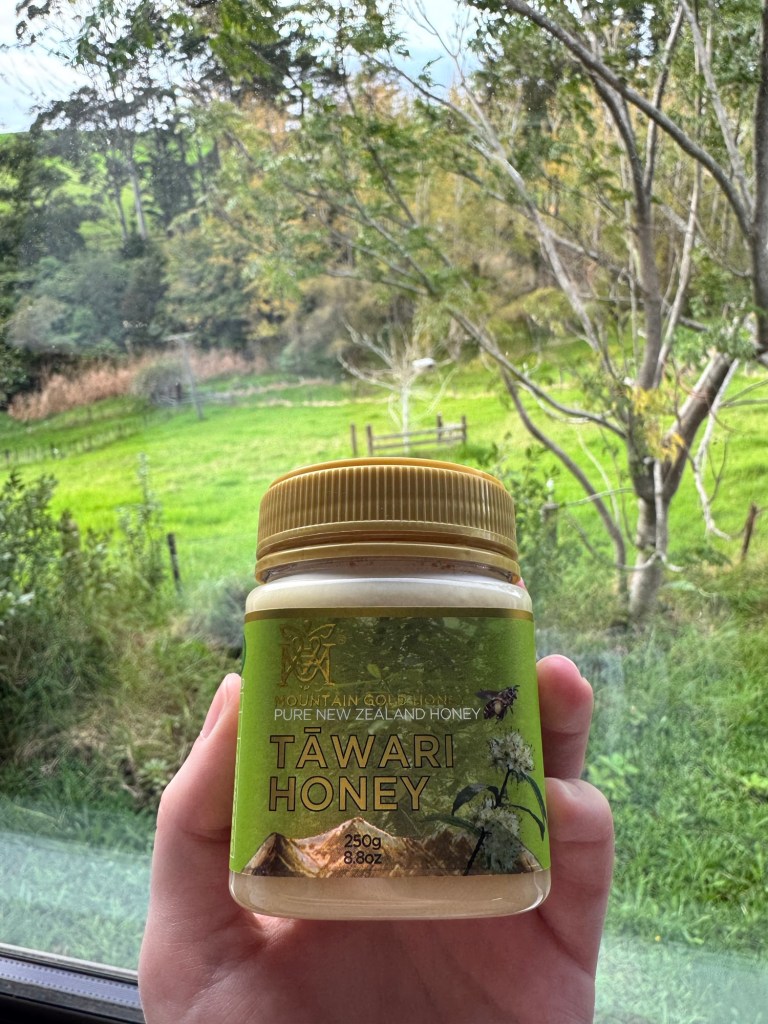
After trying a variety of the honeys we couldn’t resist but to pick ourselves a jar. We went for Tawari Honey which is a rare type, with light golden colour and has a distinct butterscotch flavour. It’s been delicious on toast for breakfast!
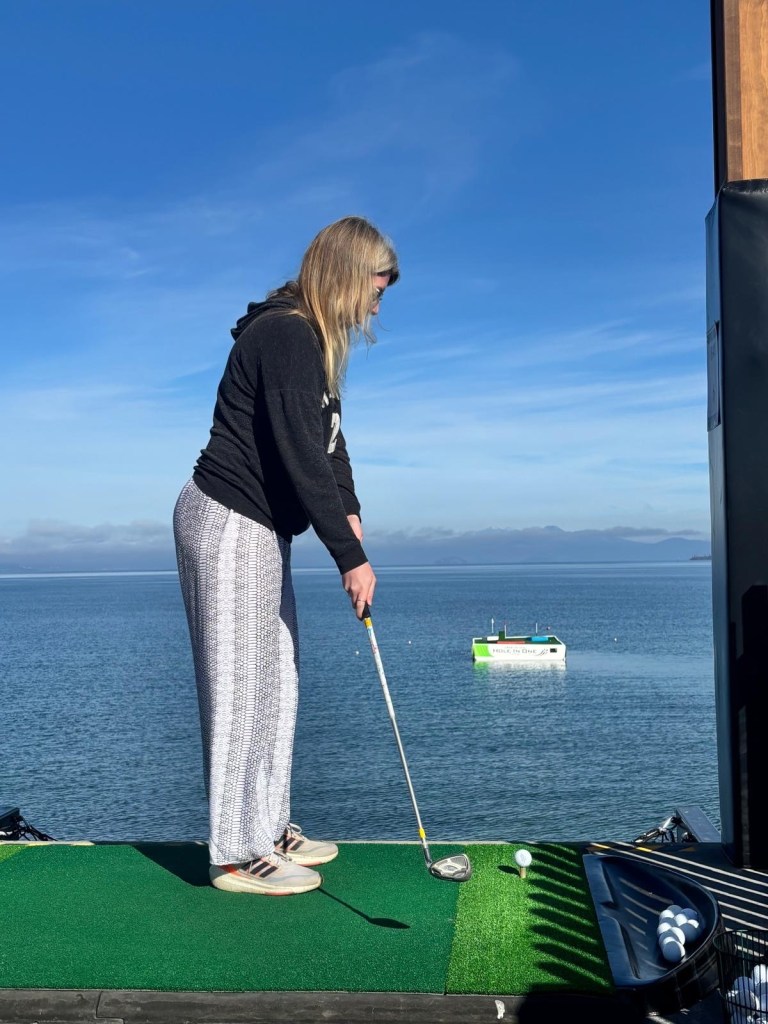
In the afternoon, we tried the Hole in One Challenge by the lake. A popular tourist attraction, people can pay for a set amount of golfballs and you have to try and get a hole in one on the floating pontoon in the lake. If you get it in the main target, you win $10,000 NZD (£4,342)!
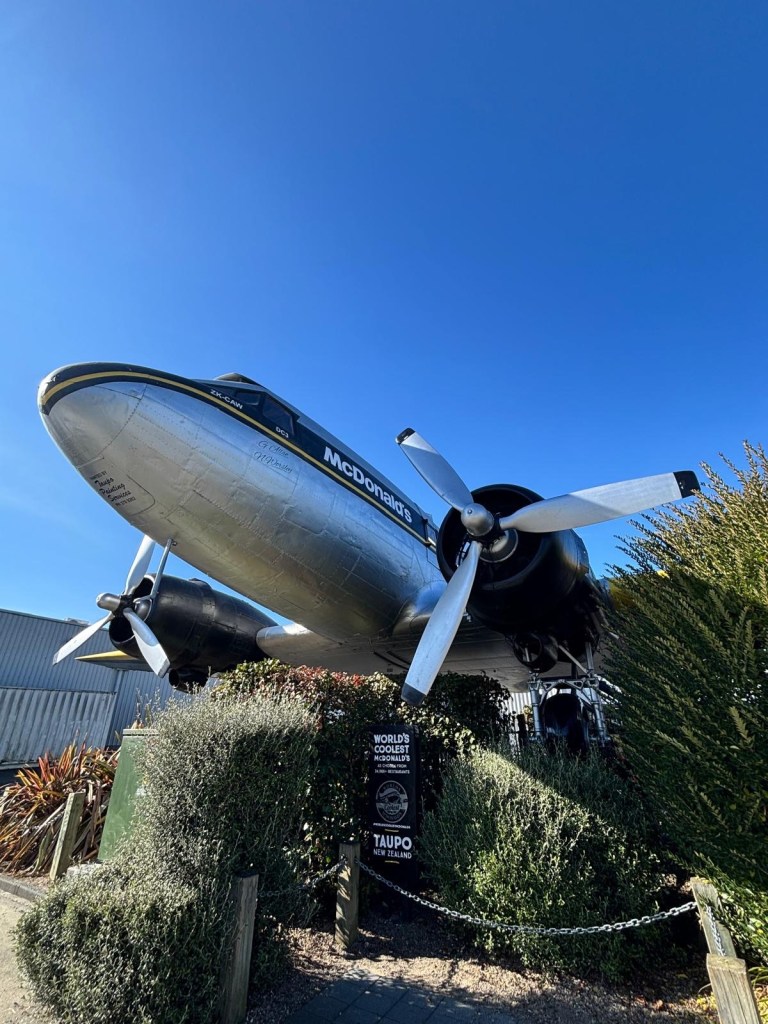
Just across the road is a McDonald’s which is known as the world’s coolest McDonald’s as chosen from 34,000+ restaurants. This is because the seating area is within a DC-3 plane. Built in 1943, it was originally served in the US Airforce in WWII. It was then integrated into the McDonald’s restaurant site in 1990.
Taupo volcano is the world’s most active supervolcano. It has erupted 29 times in the last 30,000 years which is a lot for a supervolcano. Due to its geothermic activity there are some hot springs dotted around the edge of the lake. We went to Taharepa Hot Springs which is completely free and dipped our feet in.
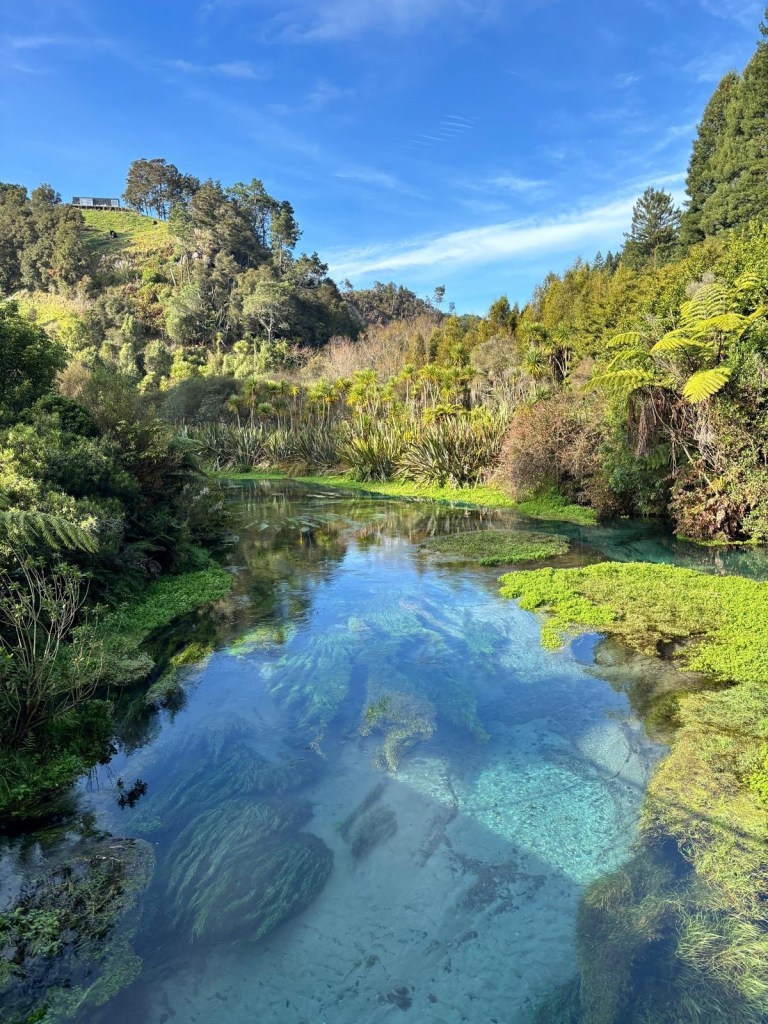
The next day it was time to leave and head off to the North of the island. On our journey we made a stop at Putaruru Blue Spring. It is internationally acclaimed for possessing some of the clearest, purest freshwater in the world. It is fed from the Mamaku Plateau where the water can take up to 100 years to filter naturally through the underground aquifers.
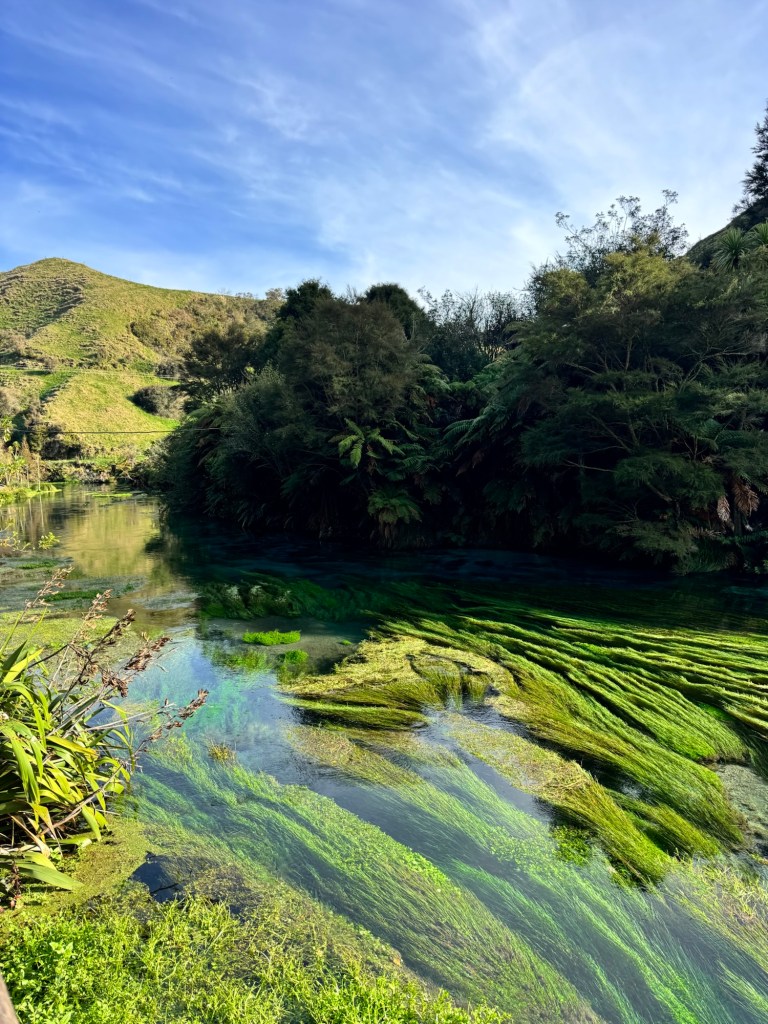
The underwater visibility is up to 63 metres. The spring flows at a rate of 42 cubic metres per minute and supplies 70% of New Zealand’s bottled water.
The journey to the north took 7 hours before we finally made it to our off grid home just outside of Parua Bay.


Leave a Reply